Version: 2008

June 25, 2007 12:51 PM PDT

Putting HD video on your phone

  • 6 comments
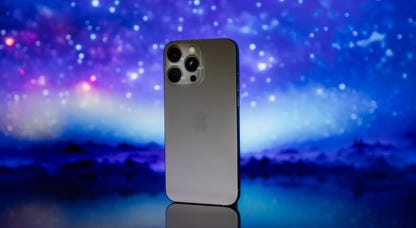
Apple will release one of the most highly touted cell phones in history this week. And by next year, those first iPhones will likely be woefully outdated.

Chipmaker Texas Instruments is in the middle of ramping up for the release of its third-generation OMAP processor, a platform for cell phones. Cell phones containing OMAP 3 will hit the market in 2008, according to Avner Goren, TI's worldwide director of cellular systems marketing.

And what will OMAP 3 phones have? High-definition video--720x1368-pixel resolution--at the high end, he said. The cameras on the phones will also be capable of shooting 12 megapixels of photos per second. That can be divided up into one 12-megapixel shot, or four 3-megapixel shots taken in burst mode.

Users will also be able to more easily zoom into relevant portions of documents or rotate files like spread sheets and Acrobat documents more easily. The phones, Goren said, will also provide better performance and be better at not interrupting a function--like watching videos or trolling the Web--when phone calls come in.

"People want responsiveness," Goren said in an interview last week. "When you rotate an Acrobat document, there are a lot of calculations going on."

TI has also been experimenting with a projector that can be inserted into a phone. The projector is capable of displaying high-definition movies onto a flat surface.

"There is more processing power than what can be shown on a cell phone screen," he said. "One of the limits is the physical dimensions of the phone."

Updating the OMAP platform is crucial for TI, which has suffered lower-than-expected revenues for the past several months. The company remains the largest provider of processors and communications chips into the cell phone market, but competition is a constant. Intel for a number of years tried to take on TI in cell phones. Intel won a few designs, but ultimately sold this division. Now, TI competes against Samsung and others.

OMAP 3 will be built around an ARM Cortex A8 processor made on the 65-nanometer process. (ARM designs the processor core and TI implements it in silicon.) It will also include integrated graphics and cores for handling other functions.

In addition, the company is making communications chips that combine different radios onto the same piece of silicon.

Despite prodding, Goren would neither confirm nor deny whether TI is supplying chips for the iPhone.

Different OMAP 3 chips will be targeted at different markets. The OMAP 3430 will sport HD video and a camera capable of 12 megapixels per second. The OMAP 3420 will sport 5 megapixels per second and VGA-quality video. For lower-end phones, the OMAP 3410 will have 3 megapixels and lower-resolution video.

For cheaper phones, TI will also update the LoCosto line of processors. LoCosto was announced in 2004, but it's only been adopted in about 50 different phones.

The cell phone market, which adds up to about a billion units a year, is being driven by two factors: new customers in countries like India, and replacement handsets in established markets. Only about 10 percent of the population in India has a cell phone, he said, but the number is growing fast.

"There are 6 million new subscribers (in India) in some month," Goren said.

In China, where there are already 500 million cell accounts, about 200,000 cell phone accounts are opened a day, according to Ted Dean, managing director at BDA, a consulting firm.

Meanwhile, in established markets, approximately 27 percent of phones get replaced annually, Goren said. (In Europe, cell phone penetration is 106 percent, meaning that there are now more cellular nodes than people).

Some cell phone applications have not taken off as fast with the public as carriers and handset makers have hoped, he noted. In Japan, videoconferencing was supposed to take off. Phone manufacturers even produced phones with an additional camera that faces the caller to facilitate video conferencing.

The networks, though, did not allocate enough bandwidth in most places for live video streaming, and the resulting service ended up being choppy.

"In videoconferencing, you need a constant allocation of bandwidth," Goren said.

TV viewing on cell phones has also taken off more slowly than expected.

See more CNET content tagged:
Texas Instruments Inc., cell phone, ARM, India, Adobe Acrobat

Add a Comment (Log in or register) (6 Comments)
  • prev
  • 1
  • next
HD on a 2" screen! HAHA what a joke!!
by bobby_brady June 25, 2007 1:39 PM PDT
Looks like they'll do anything to try and get someone to buy a phone.

Can anyone notice ANY appreciable difference between standard and HD on a 2" screen?
Reply to this comment
RTFA
by Hardrada June 25, 2007 2:48 PM PDT
"TI has also been experimenting with a projector that can be inserted into a phone."

Even without it, wireless/wired external video on external display is already an option on many 2+ year old smartphones.

A 2" display is tiny, most high/midrange phones already have at least a 2.5" display. 3" to 5" on the highend.

When you move the 2" display within an inch or two of your eyes, you do notice a difference.
Why Wait??
by Randys2cents June 25, 2007 1:42 PM PDT
Why wait for TI when Ambarella
has these chips now?

http://www.ambarella.com
Reply to this comment
Why Comment ??
by regulator1956 June 25, 2007 3:19 PM PDT
Those guys don't make stuff for cell phones !!
Breaking News!
by Estranged42 June 25, 2007 3:50 PM PDT
Products you buy today maybe be obsolete next year!
Reply to this comment
Ditto!
by Bryan777 June 30, 2007 4:37 PM PDT
No one will detect the difference between SD and HD on a cell
phone screen, not even a iPhone screen.

This is silly.
Reply to this comment
(6 Comments)
  • prev
  • 1
  • next
advertisement

Latest tech news headlines

RSS Feeds

Add headlines from CNET News to your homepage or feedreader.

More feeds available in our RSS feed index.

Markets

Market news, charts, SEC filings, and more

Related quotes

Texas Instruments (1.49%) 0.38 25.84
Dow Jones Industrials (0.83%) 85.25 10,414.14
S&P 500 (1.05%) 11.58 1,114.05
NASDAQ (1.17%) 25.97 2,237.66
CNET TECH (1.04%) 16.71 1,623.98
  Symbol Lookup
advertisement

Inside CNET News

Scroll Left Scroll Right