June 8, 2006 4:00 AM PDT
Forget the glasses--3D monitors ready now
- Related Stories
-
Power consumption on LCD TVs drops with new film
June 7, 2006 -
LCDs to overtake tube TVs in 2009
June 5, 2006 -
IPTV prepares for prime time
June 5, 2006 -
Sales of LCD TVs going like crazy
May 24, 2006 -
Plasma or LCD? Size matters
March 22, 2006 -
Can 3D TV put Philips back on the map?
January 31, 2006 -
Philips: 3D TV to appear in 2008
January 6, 2006
Several display companies are concocting, and in some cases already selling, monitors and other components that provide a simulated 3D viewing experience. Many of these new products don't require glasses.
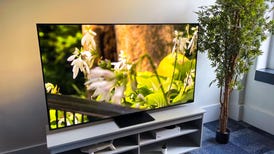
Stand in front of a Philips 3D monitor, and animated characters throw rose petals or dice at you; the first time you see it, you startle and jolt upward slightly. A film trailer shown on the monitors seems to have more depth than a standard 2D movie.
The Dutch electronics giant has tested the technology in the labs with consumers and noted that a person's galvanic skin response--a change in the skin's ability to conduct electricity, caused by an emotional stimulus, such as fright--rises with 3D viewing.
"It is clearly a more immersive experience," Jos Swillens, vice president and general manager of the 3D division at Philips, said during an interview at the Society for Information Display conference here. "There is nothing hampering this from becoming a mainstream product."
While Philips currently sells monitors with its WOWxv technology only to resorts and malls for public information kiosks, it hopes to bring out 3D TVs in about two years. The company is currently talking with broadcasters and producers to produce 3D-optimized content; it is also negotiating with other TV manufacturers to license the technology for their own sets.
"I have spent a lot of time in the Far East in the last year," Swillens said.
While Philips is one of the farthest along, others are also working on their own ideas. Toshiba is showing off a prototype 3D monitor at the conference that doesn't require glasses.
Sanyo, meanwhile, has come up with a prototype glasses-less 3D monitor that can simultaneously provide two different TV programs--one for a person on the left and one on the right--according to Goro Hamagishi, a researcher at the company. With this technology, a person in the passenger seat of a car could watch a movie while the driver could observe a 3D map, complete with skyscrapers, churned up by a GPS service and thereby navigate by sight rather than address.
By contrast, Boulder, Colo.-based ColorLink says to forget trying to get rid of glasses. The company is working with arcade game manufacturers to create immersive 3D driving games, according to John Korah, product development engineer for the company.
ColorLink, which makes polarizers for big-screen TVs, is also getting feelers from the porn industry, he added, comically cocking an eyebrow.
Pixel to pixel: How it works
Three-dimensional monitors and TVs essentially rely on human gullibility. In typical monitors, the pixels are synchronized to send out a single image. In a 3D monitor, however, half the pixels are used to create one image, and the other half are used to create a similar, but slightly different one, said Korah. Stand too close or far away, and the images overlap and make the overall picture blurry.
See more CNET content tagged:
3D, Philips Electronics N.V., glass, monitor, pixel
12 comments
Join the conversation! Add your comment
If the primary means of accomplishing what they're doing is optical channeling, then what's next, the modern-day equivalent of "color TV" plastic overlays that were sold for 1950s/1960s black-and-white TVs (they had blue, flesh-tone, and brown bands of color, from the top to the bottom of the screen)?
This too, like the dodo, shall become extinct, yet another dead end in marketeers' plans. At least they realize that it's yet-another chicken-and-egg situation, where it's useless without the content, and vice versa. Considering the dearth of quality content in 2-D, I can only imagine what ubiquitous home shopping networks, soap operas, and "reality" shows (oh, the latter two are redundant) will look like in 3-D (shudder).
Maybe I'll start a research lab for development of teletransportation devices that don't quite work, either. At least those would have a useful purpose, if and when they ever did become operational, much less economically feasible (ala the 3-D "fax" machine that would be in every 7-11 type of store in "Neuromancer").
All the Best,
Joe Blow
optical technology (standard and recordable), HDTV, and MPEG/
JPEG. Most of these were aquired when Philips bought Magnavox
and started doing manufacturing for Memerox.
So even if money runs out from sales, they have all of these patents
that just have the money keep pouring in.
Programmer #A-5 of www.totallyparanoia.com
If the primary means of accomplishing what they're doing is optical channeling, then what's next, the modern-day equivalent of "color TV" plastic overlays that were sold for 1950s/1960s black-and-white TVs (they had blue, flesh-tone, and brown bands of color, from the top to the bottom of the screen)?
This too, like the dodo, shall become extinct, yet another dead end in marketeers' plans. At least they realize that it's yet-another chicken-and-egg situation, where it's useless without the content, and vice versa. Considering the dearth of quality content in 2-D, I can only imagine what ubiquitous home shopping networks, soap operas, and "reality" shows (oh, the latter two are redundant) will look like in 3-D (shudder).
Maybe I'll start a research lab for development of teletransportation devices that don't quite work, either. At least those would have a useful purpose, if and when they ever did become operational, much less economically feasible (ala the 3-D "fax" machine that would be in every 7-11 type of store in "Neuromancer").
All the Best,
Joe Blow
optical technology (standard and recordable), HDTV, and MPEG/
JPEG. Most of these were aquired when Philips bought Magnavox
and started doing manufacturing for Memerox.
So even if money runs out from sales, they have all of these patents
that just have the money keep pouring in.
Programmer #A-5 of www.totallyparanoia.com
color, cheap to make. The experiment it was using had the skies
over the Las Vegas area appear in 3D. It was cool, but after a
while, because of the spinning tubes, I would get a headache.
Also in 1991, over at Daewoo in South Korea, I viewed
holographic TV, which would also be photographed with still or
video cameras, and 3D TV. The lady giving the tour said that
using the holographs to do 3D would be too expensive, hence,
the tech fell by the wayside. Now, I consider it ironic that after
Daewoo has collapsed that 3D TV is the style they suggested
had been reported.
3D TV will take off, though. Some elements would incorporated
into TVs, but not the way it is described here. It might show up
in slot machines, but again, not the way it is described here. I
know, though, that it won't go the way of a Viewfinder or a
Virtual Boy ( <a class="jive-link-external" href="http://en.wikipedia.org/wiki/Virtual_boy" target="_newWindow">http://en.wikipedia.org/wiki/Virtual_boy</a> ), but
might use multi-planed glass and layers via plasma, laser, LCD,
or all three, in a way we have to comprehend.
Programmer #A-5 of www.totallyparanoia.com
120 fps has long been available through surveillance systems and all the co's mentioned are working on increased fps, anyway.
color, cheap to make. The experiment it was using had the skies
over the Las Vegas area appear in 3D. It was cool, but after a
while, because of the spinning tubes, I would get a headache.
Also in 1991, over at Daewoo in South Korea, I viewed
holographic TV, which would also be photographed with still or
video cameras, and 3D TV. The lady giving the tour said that
using the holographs to do 3D would be too expensive, hence,
the tech fell by the wayside. Now, I consider it ironic that after
Daewoo has collapsed that 3D TV is the style they suggested
had been reported.
3D TV will take off, though. Some elements would incorporated
into TVs, but not the way it is described here. It might show up
in slot machines, but again, not the way it is described here. I
know, though, that it won't go the way of a Viewfinder or a
Virtual Boy ( <a class="jive-link-external" href="http://en.wikipedia.org/wiki/Virtual_boy" target="_newWindow">http://en.wikipedia.org/wiki/Virtual_boy</a> ), but
might use multi-planed glass and layers via plasma, laser, LCD,
or all three, in a way we have to comprehend.
Programmer #A-5 of www.totallyparanoia.com
120 fps has long been available through surveillance systems and all the co's mentioned are working on increased fps, anyway.