• On CHOW: Why does asparagus make your pee smell?
April 1, 2009 8:36 AM PDT

Why Android (probably) won't work on Netbooks

by Dan Ackerman

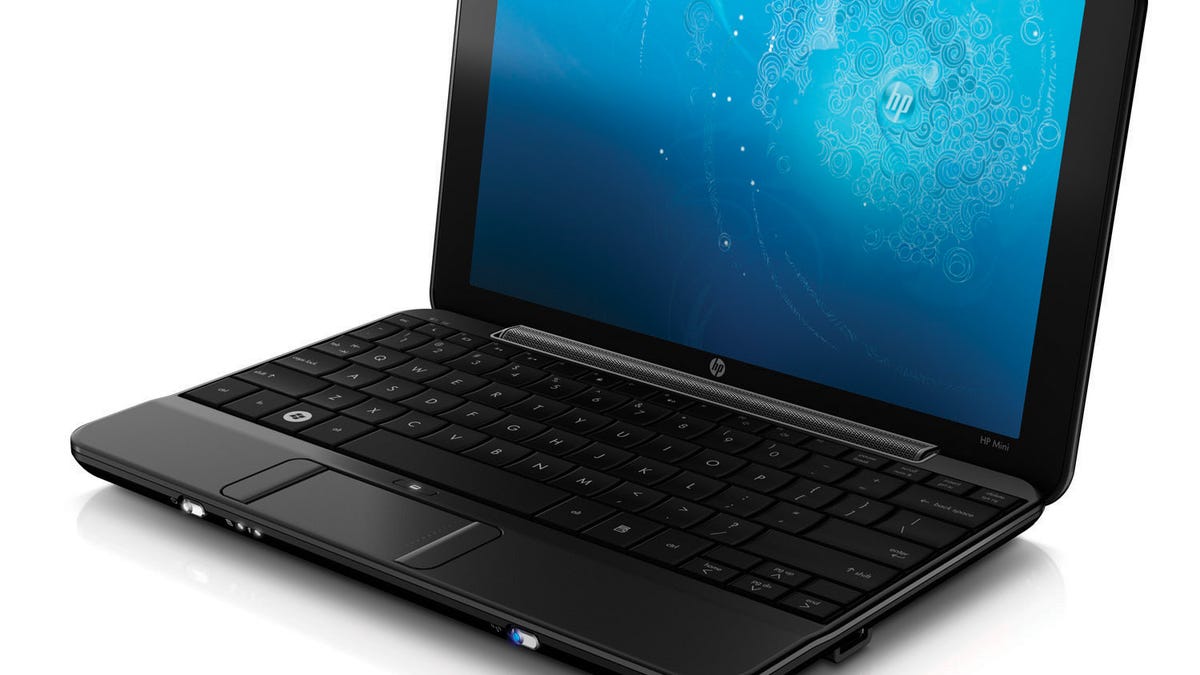
HP's Mini 1000 Netbook.

We've seen several stories recently (including one by our own Maggie Reardon) about how HP and other companies are considering using an operating system based on Google's Android platform for Netbook laptops, replacing the ubiquitous Windows XP. Examining the short history of the unexpectedly popular Netbook market, it seems unlikely that Android will be able to gain a foothold.

The very first Netbooks ran Linux operating systems, usually with a custom front-end to give users easy access to a Web browser and other frequently used apps. But as well-intentioned as that plan was, it wasn't until PC makers added the already archaic Windows XP operating system that the Netbook craze took off.

It wasn't that XP was the perfect solution for small screens and low-power CPUs -- it's that consumers searching for a simple, low-cost second or travel laptop value ease of use over almost anything else. XP benefits from looking and feeling familiar to most users.

While a non-Windows OS can easily front-load the most commonly used software (FireFox, Open Office, etc.), adding new programs can be a hassle for the uninitiated, and users can be disappointed to find their existing library of Windows software won't work (to say nothing of trying to find and install an alternative). And if something like your Wi-Fi connection, for example, isn't working for some reason, even a relative luddite can muddle through several obvious possible fixes in XP -- try getting a PC novice to figure that out under an unfamiliar operating system.

To its credit, the phone version of Android (as used on the T-Mobile G1) is very user-friendly, and an Android computer OS would likely attempt to tackle many of these issues with a features such as a built-in app store.

The Wall Street Journal says:

Market research firm NPD Group Inc. estimates that Windows comes on more than 90% of new Netbooks. Microsoft said consumers returned Linux Netbooks after discovering the PCs didn't easily work with popular programs and peripherals like printers--a challenge that could also be faced by Android, which is based on the core of Linux.

In our initial tests, Windows 7 also shows great promise for Netbooks, and seems like a much more likely candidate for the future of Netbooks than anything else. Can a non-Windows OS win over Netbook users? Weigh in with your comments below.

New York native Dan Ackerman, a former radio DJ turned journalist, has written about technology and music for publications including Spin, Blender, The Hollywood Reporter, and USA Today. He hosts the weekly Digital City podcast and the New York edition of Editors' Office Hours. Dan's new album, Tales Out of Night School, is available now. E-mail Dan.
Recent posts from Crave
Sponge absorbs 180 times its weight (in toxic sludge)
Prizefight: Motorola Droid vs. iPhone 3GS
Accessories for the iPod Touch
Beware the Blue Yeti
Smartphone users, keep complaining
Two new remote Webcams: Mole and Vue
MP3 Insider 168: Inspired by the uninspiring
WiiWaa: Fun for kids, coma for animal controller
Add a Comment (Log in or register) Showing 1 of 2 pages (57 Comments)
by Notoapplefanbois April 1, 2009 8:57 AM PDT
it may not work on netbooks but I assure you it will work with nettablet's.

Low price, touchscreen, keyboard, WWAN, OMAP4 based nettablet's.
Reply to this comment
by xZero2007x April 1, 2009 1:02 PM PDT
You missed the entire point of the article. Ackerman's saying Android won't "work" or "take off" in the netbook platform because of Linux's (the heart of Android) lack of compatibility with major mainstream software.

"Market research firm NPD Group Inc. estimates that Windows comes on more than 90% of new Netbooks. Microsoft said consumers returned Linux Netbooks after discovering the PCs didn't easily work with popular programs and peripherals like printers--a challenge that could also be faced by Android, which is based on the core of Linux."

Even on "nettablets," I would imagine the same problem exists, especially if the consumer's going to want to sync up his/her material between multiple machines and sets of programs.
by slecalvez April 1, 2009 9:14 AM PDT
Great article! Usability is the one reason why LInux will never be mainstream and Android is years behind Windows. It's the learning curve that's killing this products. Windows just works, and when it fails, you know why it failed and how to fix it.
Reply to this comment
by flatrock19 April 1, 2009 9:52 AM PDT
There have been incredible improvements in the usability of Linux, and a netbook seems like the right kind of platform where people expect some limitations. However, there are still web pages that don't load properly under Firefox, and plugins that don't exist or are difficult to install and configure.

However, as browsers other than IE become more common, web developers will do a better job of designing their web pages to work on more than just IE.

Cloud computing also shows a lot of promise in giving people the same functionality on different operating systems.

I have to agree that Linux still isn't quite ready for the mainstream, but it is getting a lot closer than it was not long ago, and my skepticism that it ever will be viable is starting to fade.
by ljb860ljb April 1, 2009 10:04 AM PDT
what learning curve... have over 4600 users from desktop to laptops using Linux, Firefox and Open Office on Ubuntu. Have not once had anyone ask to go back to XP. Do hear very often from new hires that the learning curve is very abbreviated. Some folks have said 5 minutes.

We went this way to avoid the upgrade cost of Vista and the new hardware and software cost that came with it. We avoided those costs by migration of everyone over a weekend using the 18 month old equipment. Yes we lost productivity for about a month at most, a small hit for a much larger gain. The company still has XP and Apple PCs which are planned for replacement as soon as we find suitable replacements for the smaller by the day "captive" applications.
by headlessplatter April 1, 2009 10:15 AM PDT
The problem isn't usability, it's familiarity. Linux makes many things easy that are very difficult on Windows, and if you really know what you're doing, there's almost nothing in the opposite direction. The problem is that everyone already knows how to do things the Windows way. Usability issues could prevent change from happening, but there are really only familiarity issues. These can make changes happen slowly, but they won't prevent them. Already, Windows users are becoming more accustomed to their browser, and less to Explorer.
by tcr071 April 1, 2009 10:22 AM PDT
Linux will not be mainstream until the need to type in the terminal/command prompt is completely removed and I'm sorry to stay that day isn't anywhere near because that day will only come with massive popularity. Devices and software just aren't going to work out of the box for Linux for the near future and distant future. You can't be expecting the average Windows user to search through forums figuring out how to install Wine to play their favorite game.

Linux might be easy to pick up if you want to do nothing else but what comes with Linux but beyond that OS X and Windows take it out back and give it a firm beating.
by gtyron April 1, 2009 11:06 AM PDT
Usability is great(depending on the distribution). My dad is one of the most confused users I've ever known, this summer I switched him to Ubuntu, after the initial shock he had very few questions about it. Last night he called me with one his first questions in months, he wanted to know if he had to worry about the conficker virus.
by Rolker April 1, 2009 12:30 PM PDT
gtyron

Nice story about your dad, but if he knew about the conficker virus, he's not "one of the most confused users" that you portrait him to be. And this is great for him.
I agree that one of the things that prevents from people to leave the OS they know (be it Windows or OS X) is that they are familiar with their OS. You may see this as a problem, while I see it as something normal.
If the case was of Lunux/Ubunutu being a much superior OS than the others, I would understand your astonishment from people sticking to their OSes. But Windows (and I guess OS X too, which I used for a short time) is a great OS, that doesn't fall behind Linux (except for the price, of course ;) ).
by gtyron April 1, 2009 12:44 PM PDT
The point of the story was really to say that it is usable, not that it is superior. I realize that the only reason Windows is the target of the virus is its market share and not because it is insecure(which its not). The reason I posted this is to help dispel the idea that GNU/Linux is a user hostile environment that requires knowledge of the command line(though the distribution I use does). Also, for the record, my dad really didn't know much about the virus, he had only heard on tv that there was cause for alarm. My dad is a smart guy, but he really doesn't know much about computers, he doesn't even know how to create a folder or have any concept of file management. I've tried to explain to him countless times that his email isn't stored on his computer and that he doesn't have to worry about not receiving his mail when the power is out.
by Rolker April 1, 2009 1:35 PM PDT
gtyron

I know that people have the wrong idea about Ubuntu. I have several friends that tried to use it, and some still keep using this OS (usually in dual boot).
I know it may sound silly, but most people (including myself) just want the OS that they are used to, and that all the software they know will run on it. Ububntu is free, so the logic is that people should be rushing to use it, but in reality people prefer to stay with the known, even if it costs money. And again, Windows (or OS X) are fine OSes, such a Ubuntu is.
Regarding the conficker virus, I think that the media exaggerated a bit. Sure, I'm saying this after "dooms day", but just keep your OS updated and install an anti virus software.
by gtyron April 1, 2009 4:53 PM PDT
Agreed, they always exaggerate these viruses.
Actually what you're saying doesn't sound silly at all. The only point I've been trying to make is that people have misconceptions about the usability of GNU/Linux. I haven't at all been trying to say that people's resistance to change is irrational or unnatural. Really I think the free operating system that will finally gain a decent market share will be React OS(Windows clone, years away from completion) for that very reason, familiarity.
by Inconnux April 2, 2009 11:23 AM PDT
I believe that once more people get use to Android on smartphones once the public gets use to the interface (and more apps are developed) I see no reason why it won't do well on netbooks.
See more comment replies
by desiv April 1, 2009 9:22 AM PDT
You have some valid points, especially for conversions, but not for shipped laptops.
There won't be any driver issues if HP puts Linux on their machine.
They will make sure the drivers work. :-)
As for software installs, with Android (and Ubuntu with Synaptic), that's much easier than it was.

Now, there is still the "I need/want X Windows app", and that's valid.
And there's still the larger issue of "I want Windows because everyone has Windows," and that's still a major issue.

But with more and more people living on the Web and using Firefox, and Linux distro with Firefox, PDF viewer, flash viewer, some important codecs (again, if this comes from a vendor, these will (must) be preinstalled), that will be less of an issue.

I'm not going to say "Linux for everyone now!", but some of the old arguments are showing their age a bit.. :-)

desiv
Reply to this comment
by flatrock19 April 1, 2009 10:23 AM PDT
The drivers will likely work with the OS as shipped. However, once you start adding patches or updating the OS there might be more problems.

Linux developers have a long history of making considerable kernel changes in even minor revisions and breaking lots of drivers. Supporting device drivers on Linux can be a nightmare at times. It took up the lion's share of our support efforts and was far from the platform on which we had the most sales.

As long as you have a working configuration and don't change it things will be fine. However, if you try and update things, which people always do, things can get uglier even faster on Linux than they do with Windows.
by desiv April 1, 2009 11:03 AM PDT
Which is true, if you're playing with your OS. But the people likely to do that are the people likely to find fixes themselves.
We're talking about Windows-esque end users. The ones who will get updates from their vendor only.
Those users won't have those issues, as long as HP/Google do this right.
Even the latest Ubuntu releases are very good at handling driver updates.

Again, I'm not saying it's "the time", I'm just saying that the arguments against are a bit dated. Linux has improved quite a bit in these areas very recently, and especially with a Vendor supported OS, I don't expect those issues.

Other issues (app compatibility), sure. But driver problems in these situations are so 2008. :-)
by flatrock19 April 1, 2009 3:40 PM PDT
"We're talking about Windows-esque end users. The ones who will get updates from their vendor only."

Until the hear about something new they want to run, and hear they have to apply some patch to get it to work. They'll have no idea what applying the patch actually means, but they'll try it because they read on the web that they need to do it to get the software to run...

Linux developers just don't limit themselves to what a certain version of Linux does like Windows developers do because Linux is in a constant state of change.

Until there are more rigid and constant interfaces within the kernel and developers start abiding by them better, Linux will remain a problem for users.

If you can get users to be happy with the applications that come on the machine, or wait for the system vendor to provide updates, then that is fine.

If HP were able to have one hardware configuration and not have it constantly changing as they switch to new components it wouldn't be too hard to keep drivers up to date and provide new software in a timely manner. Unfortunately that's not reality. Hardware changes because they are always looking for a way to provide more functionality for less cost. They end up with a series of varied hardware configurations any of which may break when the kernel is updated or patched.

HP doesn't exactly have a great track record even for updating all their drivers for printers and scanners in a timely fashion even for new Windows versions.
by Mr.Californian April 1, 2009 9:28 AM PDT
Yes, yes it can. Users merely need to understand that everything won't work in the traditional way, and by no method is this more apparent than with a designated Market. Were this ever to become a production product, HP would develop an app for their own printers, and inevitably someone would come out with a universal one much like microsoft's own. Anyone who would use advanced software would understand the limitations, and anyone who uses office suites would have a ready supplement in an editable version of Google Docs for Android.
Now all we need is an operating system from Google to replace windows on our desktops!
Reply to this comment
by CTO_Dude April 1, 2009 9:37 AM PDT
and when none of your old apps work anymore and you need support, you can email support... oh wait.. if your Android netbook isnt working and you cant use email... um... and it's not between the support hours (since they only cover 1/3 of the day). Then what?!?!?! Google is not a consumer ready service!!!
by dymaxion1 April 1, 2009 9:31 AM PDT
And Man will never fly, People will never want to use a mouse, Are you really that subserviant to your microsoft overlords
Reply to this comment
by CTO_Dude April 1, 2009 9:40 AM PDT
and Google arent overlords? They search all of your private content and use it to display ads.
by tipoo_ April 1, 2009 9:38 AM PDT
The moment they make a (very) cheap ARM based netbook with Linux, I'm getting it.
Reply to this comment
by Fire Balls April 1, 2009 9:38 AM PDT
lol I'm running windows 7 beta and xp (dual booting duh) off my Acer Aspire one 10.1" I did upgrade my ram to 2GB but windows 7 it was still running just fine with 1GB (as I have seen on other platforms as well). And yes people like the windows platform because they are more used to it as well as their software library still being able to run. Until some other OS can do that Windows will hold their own.. no matter what.
Reply to this comment
by gtyron April 1, 2009 9:38 AM PDT
I wouldn't dream of running anything on a netbook other than GNU/Linux(or maybe FreeBSD), even though Android uses the Linux kernel it is far from a full GNU/Linux environment. If people want Android for their desktops and laptops the best thing to do is to port Dalvik, Androids own non-standard version of Java. Using Android would require users to forfeit almost their entire library of applications that run on GNU/Linux. Furthermore Dalvik has an API designed for mobile phones and any applications you write would be very awkward with a full keyboard and a mouse. You could write new libraries targeting desktop environments, but there is no point, we already have a Java platform targeting the desktop, Java SE.
Reply to this comment
by jscott418 April 1, 2009 9:52 AM PDT
Great article Dan. I know their are a lot of geeks who want more open source on more things. But as we all know geeks do not make up the majority of people buying these products. Phone's are are different then computers. They have to perform specific tasks and can be almost any kind of OS without most caring.
However the PC is not so simple and since many companies have their own requirements and custom software that is rarely compatible with Linux. Its much harder to have a Linux OS on computers that are consumer oriented. One of my big issues with Linux is not with the OS itself but with its image. It has no image! Its Ubuntu, Red Hat, Susie, and a host of other distributions. How can any OS create a image from this kind of model. Until Linux fixes its image and gets one good version out in retail. It cannot gain familiarity from the general user.
Reply to this comment
by Al Meckler April 1, 2009 10:01 AM PDT
I get it, this is an April Fool's joke -right? If HP put out a netbook with Android it would sell.
Reply to this comment
by vaporland April 1, 2009 10:11 AM PDT
I have just ordered the HP1000 10" mini refurb for $279, and will install Leopard on it;

This is easy to do, and I purchased Leopard specifically for this reason. You can have XP and Linux, I'll take Mac OS X, thank you very much.
Reply to this comment
by forever4now April 1, 2009 10:11 AM PDT
I see Android creating a new category of netbook, rather than displacing Windows on existing netbooks. Such a device would have characteristics like:
- net-oriented "thin" OS (Android)
- fast boot & run time
- always-on operation (like a mobile phone)
- super long battery life (days?)
- simple to learn, simple to use
- touch-optimized UI
- mobile phone calls (if GSM/3G equipped)
- app store for easy free/paid app installation
- lots of location-based apps
- low/no OS maintenance (especially compared to Windows)
- quiet (no cooling fans)
- ultra low cost BOM (ARM CPU?; small SSD)
- compact form factor
Reply to this comment
by DrForbin April 1, 2009 10:18 AM PDT
The day will come, that Linux will be more main stream.
You starting to see this in Europe more and more.
However in the United States the conversion rate of Microsoft users
to Linux users is going to be a slow process, mainly because most
users strive for instant productivity, they need to use the
same software packages that they have at work, until Linux cracks the
business desktop market the transition of users from Microsoft Windows
to Linux/Android is going to be a slow trickle. What Linux really needs to boost
the conversion rate, is a killer must have application that's initially is
only available on a Linux Android platform.

www.knamejumper.com/blog
Reply to this comment
by txgnu April 1, 2009 10:20 AM PDT
Well, users aside, OEMs don't want to pay Microsoft much or anything to install Windows on these low-margin machines so I think they'll keep pushing Linux. ( And Intel's doing all it can to help out.)

To solve the problem Windows netbooks are often going to come with a special version of W7 for which OEMs won't be charged much. It will have lots of limitations (unlike the Linux alternatives) so you'll need to upgrade to a better version of W7 for which Microsoft will charge you a decent amount. Microsoft shareholders are hoping they'll make a buck (or at least stop losing a buck) but will users will like the idea? It's the OS equivalent of buying an expensive new printer and finding out there's only a trial toner cartridge and there's no USB cable included and that you're quickly going to have to shell out another $100. But it's even worse because if you are a Microsoft diehard you want MS Office as well and that's going to set you back some serious additional cash. That's a lot of extra money to blow in a recession just because you're afraid to try something new.

BTW the claim that "it wasn't until PC makers added the already archaic Windows XP operating system that the Netbook craze took off" is incorrect. Asus started the craze with Linux. It was about 6 months before any WXP notebooks appeared from Asus and by that time they'd shipped truckloads of Linux netbooks. Microsoft didn't see the netbook market coming. If they seen it coming they would have tried to kill it because, whether they dominate the netbook market or not, the market is taking huge chunks of profit out of their business.


to compete with with lots of limitations so Microsoft can up sell the user to a real version.
Reply to this comment
by GodWish April 1, 2009 10:23 AM PDT
I donot belive this crap, Either Dan you are an ardent fan of Microsoft and you have done very less reaseach on android.. Only argument that I see is that People do not want to change but otherwise I think Android has no problem whatsoever to be installed on netbooks and to use it conveniently. I feel this article is biased.
Reply to this comment
by pizzapanther April 1, 2009 10:48 AM PDT
First I agree there is a bias in this article. Often here on CNET when you hear about Linux you are always told is it something not to be wanted and something unfamiliar. Number one take some time to get to know the Linux products and I believe you will come to love a lot of them. Number two about the familiarity, why don't we ever here that argument against Macs? I've never see someone say don't get a Mac because you know XP. So that whole argument should be thrown out. Plus XP is old as the hills and it's days are number so familiarity is going to be an issue for all of us whether it is upgrading to Windows 7, or changing to Linux or a Mac.
Reply to this comment
by dpayers April 1, 2009 10:56 AM PDT
(almost) all Linux apps are free. most Windows apps cost $$$. throw in the savings that you get with the Linux OS vs MS and you can be talking about hundred of dollars, easily. to me this is the real reason why most people will eventually be choosing Linux for their computers.

as for familiarity and ease-of-use, distros like Ubuntu have made a lot of headway there and i would say that probably for about 95% of hardware configurations out there today you DONT need to ever worry about the command line on those setups. for those time that you do, well you might not have someone holding your (figurative) hand with support but at least you're not paying for the support either.

so, no thank you to MS and closed source. we're in a recession for chrissakes.
Reply to this comment
by obvio-capitao April 1, 2009 11:09 AM PDT
Dan Ackerman,

Your article is historically innacurate.

> But as well-intentioned as that plan was, it
> wasn't until PC makers added the already archaic
> Windows XP operating system that the Netbook
> craze took off.

The netbook craze took off *before* Microsoft slashed the price of XP, and Microsoft did that to be able to compete with Linux in the hottest-growing market.

> It wasn't that XP was the perfect solution for small
> screens and low-power CPUs -- it's that consumers
> searching for a simple, low-cost second or travel
> laptop value ease of use over almost anything else.

Netbook consumers are looking for low cost, period.

If Microsoft put a price tag of $50 on Windows 7, they will have to compete with $0 in a sub-$300 market.

> In our initial tests, Windows 7 also shows great
> promise for Netbooks, and seems like a much
> more likely candidate for the future of Netbooks
> than anything else.

Android doesn't have to surpass Windows 7 in sales to be considered a success.

If Android gets 20% of the market share it will be a huge victory for Linux and Open Source.
Reply to this comment
by Yellowbird77 April 1, 2009 11:18 AM PDT
I think if you offered Android via Google on the net, prominently displayed, along with instructions telling folks they could switch from Windows, reboot and go to Android, and reboot and go back to Windows to LEARN ANDROID, you might beat back the learning curve.

Even I won't try operating systems for fear of upsetting my computer which is running Windows quite nicely.
Long having been screwed with old XP updates and crashes, including the complete loss of a computer's memory a couple of years ago, I decided my new computer would not be used to experiment with foreign platforms.

I am a general user. Not a programmer, I have been out of computer sciences in the mainstream at work (where I worked for a computer serves office in an aerospace firm) for over 10 years. I am out of touch, which is a no no in the world you live in. The less information I have, the less inclined I am to try anything new.

Your problem is not your inventive and most probably better; software. It's your sales job of it.
Reply to this comment
by jeffshattuck April 1, 2009 11:28 AM PDT
Great discussion. I would add that Linux and Android are not the same, Android is merely Linux based. Further, to assume that Android won't be user-friendly means you think Google Search, Apps and Gmail are not user friendly, or at least indicate that Google can't build a decent UI.

For me, Andoid Netbooks will find a great market with all those who are willing to experiment a bit and accept fewer functions in return for a much lower cost. Most likely, MSFT will end up trying to create some sort of free version of its OS, which, if the courts have any say, will not fly.

Last, I think the OS matters less and less for everyday users. What people interact with is the browser, and as long as FF works well with Andriod, people will be reasonably happy, I think. In fact, I'd go so far as to say that the OS of the future will be a virtual machine.

Jeff
www.cerebellumblues.com
Reply to this comment
Showing 1 of 2 pages (57 Comments)

About Crave

The name says it all. Crave is our blog about gorgeous gadgets and other crushworthy stuff. If you would like to contact Crave with a tip or comment, please write to: crave@cnet.com

Add this feed to your online news reader

Crave topics

After 5 years, Firefox faces new challenges

Mozilla helped reshape the Web since releasing Firefox 1.0 five years ago. Now it's got a reawakened Microsoft and Google Chrome to reckon with.

There's a map for that: GPS or smartphone?

Almost every handset comes with mapping software these days, but standalone GPS devices are becoming more affordable than ever.