• On MovieTome: The 10 worst movies of 2009 so far!
February 11, 2009 3:47 PM PST

U.S. and Russian satellites collide

by William Harwood
  • Font size
  • Print
  • 35 comments

In an unprecedented space collision, a commercial Iridium communications satellite and a defunct Russian satellite ran into each other Tuesday above northern Siberia, creating a cloud of wreckage, officials said today. The international space station does not appear to be threatened by the debris, they said, but it's not yet clear whether it poses a risk to any other military or civilian satellites.

"They collided at an altitude of 790 kilometers (491 miles) over northern Siberia Tuesday about noon Washington time," said Nicholas Johnson, NASA's chief scientist for orbital debris at the Johnson Space Center in Houston. "The U.S. space surveillance network detected a large number of debris from both objects."
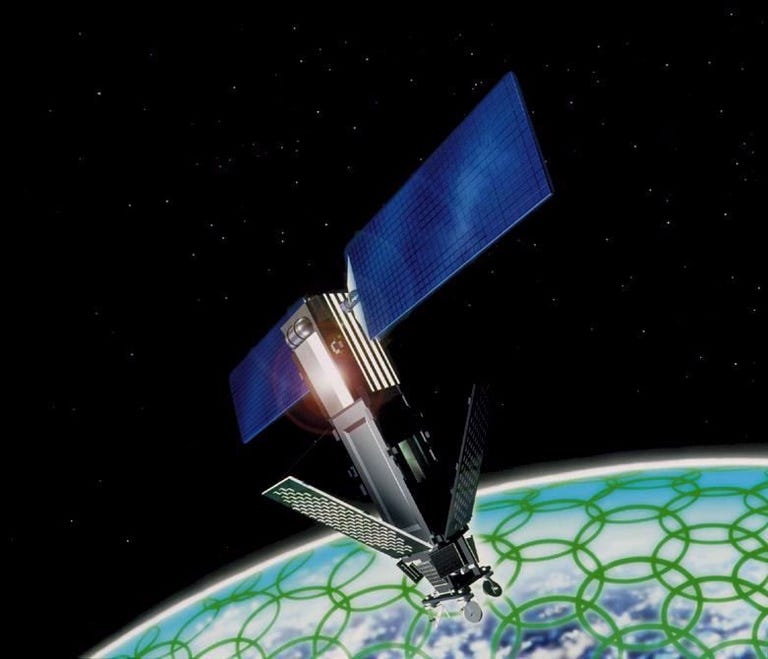
g of an Iridium satellite near earth.

A rendering of an Iridium satellite near earth.

(Credit: Iridium Satellite)

Air Force Brig. Gen. Michael Carey, deputy director of global operations with U.S. Strategic Command, the agency responsible for space surveillance, said initial radar tracking detected some 600 pieces of debris. He identified the Russian spacecraft as Cosmos 2251, a communications relay station launched in June 1993, and said the satellite is believed to have been non-operational for the past 10 years or so.

"As of about 12 hours ago, I think the head count was up (to around) 600 pieces," Carey told CBS News late today. "It's going to take about two days before we get a solid picture of what the debris fields look like. But you, I think, can imply that the majority of that should be probably along the same line as the original orbits."

He said U.S. STRATCOM routinely tracks about 18,000 objects in space, including satellites and debris, that are 3.9 inches across or larger. Tracking priority and "conjunction analysis"--identifying which objects may pose a threat to manned spacecraft--is the first priority.

"It's going to take a while" to get an accurate count of the debris fragments, Johnson said. "It's very, very difficult to discriminate all those objects when they're really close together. And so, over the next couple of days, we'll have a much better understanding."

Asked which satellite was at fault, Johnson said "they ran into each other. Nothing has the right of way up there. We don't have an air traffic controller in space. There is no universal way of knowing what's coming in your direction."

Iridium Satellite operates a constellation of some 66 satellites, along with orbital spares, to support satellite telephone operations around the world. The spacecrafts, which weigh about 1,485 pounds when fully fueled, are in orbits tilted 86.4 degrees to the equator at an altitude of about 485 miles. Ninety-five Iridium satellites were launched between 1997 and 2002 and several have failed over the years.

"Yesterday, Iridium Satellite LLC lost an operational satellite," the company said in a statement. "According to information shared with the company by various U.S. government organizations that monitor satellites and other space objects (such as debris), it appears that the satellite loss is the result of a collision with a non-operational Russian satellite.

"Although this event has minimal impact on Iridium's service, the company is taking immediate action to address the loss. The Iridium constellation is healthy, and this event is not the result of a failure on the part of Iridium or its technology. While this is an extremely unusual, very low-probability event, the Iridium constellation is uniquely designed to withstand such an event, and the company is taking the necessary steps to replace the lost satellite with one of its in-orbit spare satellites."

Johnson said the collision was unprecedented.

"Nothing to this extent (has happened before)," he said. "We've had three other accidental collisions between what we call catalog objects, but they were all much smaller than this and always a moderate sized objects and a very small object. And these are two relatively big objects. So this is a first, unfortunately."

As for the threat posed by the debris, Johnson said NASA carried out an immediate analysis to determine whether the space station faced any increased risk. The station, carrying three crew members, circles the globe at an altitude of about 220 miles in an orbit tilted 51.6 degrees to the equator.

"There are two issues: the immediate threat and a longer-term threat," he said. "It turns out, when you have a collision like this the debris is thrown very energetically both to higher orbits and to lower orbits. So there are actually debris from this event which we believe are going through the space station's altitude already. Most of it is not, most of it is still clustered up where the event took place. But a small number are going through station's altitude.

"Yesterday, we did an assessment of what the risk might be to station and we found it's going to be very, very small. As time goes on, (that) debris will (come down) some over months, most over years and decades and as the big ones come down they'll be tracked, we'll see them and the worst-case scenario, we'll just dodge them if we have to. It's the small things you can't see are the ones that can do you harm."

Asked if other satellites might be at risk, Johnson said, "Technically, yes. What we're doing now is trying to quantify that risk. That's a work in progress. It's only been 24 hours. We put first things first, which is station and preparing for the next shuttle mission."

Most, if not all, of the debris is expected to eventually burn up in Earth's atmosphere.

Bill Harwood is a space analyst for CBS News.

William Harwood has been covering the U.S. space program full-time since 1984, first as Cape Canaveral bureau chief for United Press International and now as a consultant for CBS News. He has covered more than 115 shuttle missions, every interplanetary flight since Voyager 2's flyby of Neptune, and scores of commercial and military launches. Based at the Kennedy Space Center in Florida, Harwood is a devoted amateur astronomer and co-author of "Comm Check: The Final Flight of Shuttle Columbia." You can follow his frequent status updates at the CBSNews.com Space Place, where this story was first published.
advertisement
 
Business supplies and services can get expensive. Get smart spending tips and learn about new cost-saving opportunities for your business
Recent posts from Cutting Edge
NASA signs 'The Rock' to make it seem cool
Large Hadron Collider up and running again
Fortified rice, fuel cells among Tech Award winners
Shuttle Atlantis completes smooth station linkup
U.S. and China agree to explore space cooperation
IBM chip to speed medical diagnostic testing
Shuttle Atlantis takes off on station delivery mission
Hackers create tools for disaster relief
Add a Comment (Log in or register) Showing 1 of 2 pages (35 Comments)
by michaelejahn February 11, 2009 4:36 PM PST
I guess my first reaction is "what, are you kidding me ?" - They had no way of knowing that two objects that are circling earth are about to collide ? Seriously, I am astounded. I mean, this smells like "gee wiz, who knew they would hijack those planes" what are these people doing ?
Reply to this comment
by rneva February 11, 2009 4:37 PM PST
I am glad we cannot travel in space yet. What a mess up there!
Reply to this comment
by Commander_Spock February 12, 2009 12:20 AM PST
Re: "I am glad we cannot travel in space yet. What a mess up there!" Well, you know what they say: "What does not happen in 20 years can happen in one day"; and, with "crowd" building up with the Chinese, the Indians, the Iranians rushing to dump more "rubbish" into space... the worse is yet to come.

"Beam Us Up - Scotty"!
by jacksoncapper February 11, 2009 4:49 PM PST
Yeah, that's a bit of a worry. It's an indicator of how much junk must really be up there. Perhaps a world space object and orbit registry needs to be set up to ensure collisions will not occur between two objects. I thought there already was something like this.
Reply to this comment
by timber2005 February 12, 2009 8:36 AM PST
You are correct. There is a system for working sats so no two intersect at a orbit, at a certain speed and angle, etc. Its 3D so there are a lot more possabilities vs a 2D plane.

However, A dead satellite can't be controlled to maintain an altitude like a working on can. Adjusting a working one to AVOID one will cost fuel which will end its useable life sooner. Dead sats also have a somewhat harder to predict altitude (less circular, more eliptical). Therefore it was out of its intended orbit.
by hugociss February 11, 2009 4:50 PM PST
Its about time to have a few Space Controller! Lol.
Reply to this comment
by Gizmohoward February 11, 2009 5:27 PM PST
Eventually, something is going to hit the space station.
Reply to this comment
by Gabey8 February 11, 2009 5:31 PM PST
As cynical as this sounds, when I first saw this headline, my initial thought was, "I wonder which of them was aiming for the recently-launched Iranian satellite."
Reply to this comment
by billcross6 February 12, 2009 10:56 AM PST
I'm right there with you. My first thought was who was testing their satellite killer?
by popeyeus February 11, 2009 5:37 PM PST
Do they have no fault insurance?
Reply to this comment
by LinuxRules February 11, 2009 5:38 PM PST
If this so unprecedented, you know damn well this is just the beginning, the more and more satilites we shoot up to orbit. Why can we not design the retired satilites to make them burn up in the atmosphere instead of just allowing them to slowly decay in orbit? This is just as bad as China blowing up satilites with ground missiles. Why is there morons running the Chinese government?
Reply to this comment
by timber2005 February 12, 2009 8:39 AM PST
"Slow Decay" already exitis naturally. The problem with that is the chance that a piece (surviving reentry) could hit land, and ergo people. You would want a CONTROLLED reentry, which means having control of it... which the russian sat did not have.
by LLamabob February 11, 2009 6:03 PM PST
NORAD spends 100's of millions of dollars / year tracking Santa Clause, but they missed this one. Our government $$ at work.
Reply to this comment
by sythara February 12, 2009 6:50 AM PST
Site your source on that dollar figure.
by mraardvark February 11, 2009 6:24 PM PST
If I was sitting in the space station, I'm not sure I'd be comforted by the declaration that the station was safe made by the same people who didn't see this coming in the first place.
Reply to this comment
by ArtLa February 11, 2009 6:29 PM PST
What they didn't mention is an imaginable "tipping point" when floating debris crashes into other objects, creating more debris faster than the existing debris can fall down. The worst case is a chain reaction that grows out of control, destroys everything in at least one altitude level, and becomes a long-lived debris barrier to all space exploration. So what are the odds of such a secondary collision before the existing debris comes down or enters a stable orbit?
Reply to this comment
by Mystigo February 11, 2009 7:31 PM PST
I can't remember where I read about this, but there is a hypothesis that this tipping point will be reached soon, and there will be no "safe" orbital level. That the chain reaction of ever increasing amounts of debris colliding with the remaining operational satellites will very quickly and effectively shut the human race off from space.

This statement bothers me also: "Most, if not all, of the debris is expected to eventually burn up in Earth's atmosphere.". This expectation is unattributed, but I assume it was expressed by either Johnson or Carey. What they may have neglected to mention to the hapless author is that in cosmological terms, "eventually", might as well be forever for some of those higher altitude pieces.
by Dalkorian February 12, 2009 10:44 AM PST
Mystigo, go study some physics. That statement is fact, not opinion. Consider that an orbit is basically falling to earth, but moving fast enough to constantly miss it. Consider that these things are in the high atmosphere and not deep space. Consider atmospheric friction and what it does to high speed moving objects. Consider what happens to an object that's falling to earth, moving fast enough to miss it but slowing down due to atmospheric friction ...
by Countrykenrs February 11, 2009 6:57 PM PST
I find this article I incredulous. I would be more inclined to believe that two people standing at each end of a gymnasium each with a BB could toss them into the air and have them collide than I would believe that two satellites 500 miles above the Earth would accidentally collide. I would find it much more likely that the Russians were demonstrating their capabilities to track an other satellite and maneuver one of theirs' onto a collision course.
Reply to this comment
by sythara February 12, 2009 6:51 AM PST
Unlikely. Geostationary orbit is a very narrow corridor where things are bound to collide eventually.
by pentest February 12, 2009 6:51 AM PST
Tin foil hats look lovely this time of year.

The problem of space debris has been well-known for a while.
by williamjgreene February 12, 2009 4:05 PM PST
Bingo! This was no accident. Especially if the Russian satellite was truly out of control and then supposedly hit the Iridium satellite which was operational and in it's orbit. This scenario would be no different than a car careening out of control but never actually leaving the road. In the vastness of space, I have a hard time believing that.

IMO, the Russian satellite was intentionally steered into the Iridium satellite of which is used solely by the Department of Defense. It seems fairly obvious to me; but, the US has so many problems right now, we don't have the time, focus or resources to deal with the issue. But you had better damn well know that the top brass in the US are very aware of what really happened.

The media could have gotten this by us in the 60's; but, we aren't nearly as naive these days. Most cognizant people know in their own head, that this is pure BS whether they ever say anything or not.
by scottthesculptor February 20, 2009 12:08 PM PST
Given that the US military tracks all objects baseball size and larger in orbit.
*They* knew that there was a collision about to take place.
But article says nothing about when the Iridium last maneuvered
Figure the dead soviet satellite wasn't under power and had very predicable orbit
So if the iridium was playing dead the collision would have been calculated days ahead of impact
If it moved to redistribute the iridum set . . .

and "geostationary" crowded?
one - these were both in much lower, crossing orbits with lots less 3D space and lots more space junk.
two - geostationary is so far out that it would take millions of objects to even start getting crowded - and even then they'd all be moving in the same direction and speed ('cept the dead ones which would be moving very slowly in relation to the live ones).
by ewalsh69 February 11, 2009 7:35 PM PST
Its aliens doing some target practice, with the world Govt's covering it up with this "collision" story ;-)
Almost sounds like a SG-1 story plot!!!!!!
Reply to this comment
by Commander_Spock February 12, 2009 12:30 AM PST
Hilarious!
by Dalkorian February 12, 2009 10:45 AM PST
It was the gray aliens. I know because they did this after inserting my anal probe. LOL.
by Marktnz February 11, 2009 7:39 PM PST
If two satellites were simply in orbit surely they could not hit each other unless one or both had drives operating. For one to to have drives operating it must have been intently heading directly towards the other for the accident to happen. Only question is - intentional or accident.

Are you kidding that "There is no universal way of knowing what's coming in your direction".

For gods sake the yanks spend millions putting a satellite into space that cant even see where they are going, then they fire them blindly around outerspace like some headless chicken.

Its either that or it was intentional... which is it...?... either way its full of space junk up there and its like mraardvark said:
"If I was sitting in the space station, I'm not sure I'd be comforted by the declaration that the station was safe made by the same people who didn't see this coming in the first place."
Reply to this comment
by timber2005 February 12, 2009 8:44 AM PST
Heh, you think the people (rather massive TEAMS of people) can't compute that two sats will hit (when a dead sat. has a nearly unpredictable orbit due to atmosphere drag that varies with solar winds) yet a simple person can't figure out that a RED STOP SIGN means STOP OR YOUR GOING TO HIT THAT CAR and keep on going.
by Vegaman_Dan February 11, 2009 8:11 PM PST
Hey! That other guy came into my lane without his turn signal on. It's not my fault!
Reply to this comment
by JCPayne February 11, 2009 8:20 PM PST
The Russians and America have gone from fighting over missle defense, to Georgia, to Iran and now to "hey, my space junk was here first!" It is a good thing there no such thing as space-road-rage yet.
Reply to this comment
by George_Marenco February 11, 2009 10:13 PM PST
Allstate Insurance.....Are you in good hands?
Reply to this comment
by Noneyabeeswax February 12, 2009 11:16 AM PST
There's so much junk floating in orbit, I've often wondered how the space shuttles managed to make all those flights without getting pinged more than once. Who knows? Maybe they did get dinged and we just haven't heard about it.

"He identified the Russian spacecraft as Cosmos 2251, a communications relay station launched in June 1993, and said the satellite is believed to have been non-operational for the past 10 years or so."

If the Russian was non operational the orbit may have degraded just enough to put it in the path of the iridium satellite.

The launchers usually calculate all this stuff before they put a satellite up there, so this doesn't happen.
Reply to this comment
by punterjoe February 12, 2009 1:19 PM PST
Where's the space-roomba when you need it? :/
Reply to this comment
by galeso February 21, 2009 4:51 PM PST
Usually I would vote against the conspiracy theory, but this one really smells.
Orbits are determined by speed, so if they were in similar orbits they should be going about the same speed. Why didn't countries agree to drive all satellites in the same direction?
Then if they hit it would just be a tap not a crash.
Yes I oversimplified but what would the odds be for a crash?
Reply to this comment
Showing 1 of 2 pages (35 Comments)
advertisement

The 411 on early-termination fees

Verizon Wireless has doubled its early-termination fees for smartphones, but what does it mean for the rest of the industry?

Google has its own plan for Netbooks

No, the search giant isn't saying it will build a Netbook. But it sure knows what it would like one running Chrome OS to resemble, and that's a little different from the Netbook of today.
• Screenshot tour of Chrome OS

About Cutting Edge

Keep up-to-date on cutting-edge research and what's new in a wide range of areas from robotics, space ventures and general science to automobile design and solar energy.

Add this feed to your online news reader

Cutting Edge topics

advertisement

Inside CNET News

Scroll Left Scroll Right