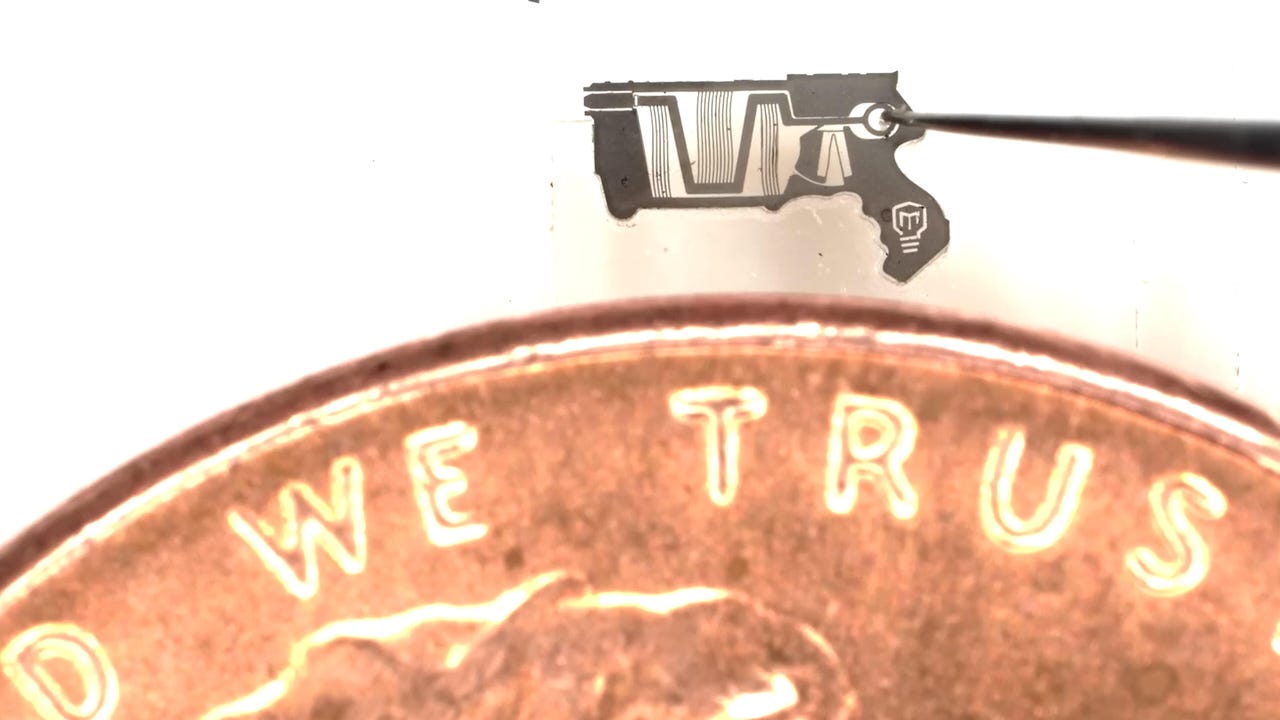
• On TechRepublic: 10 cool USB flash drive tricks

Cutting Edge

Read all 'MIT Senseable City Lab' posts in Cutting Edge
July 15, 2009 10:06 AM PDT

MIT project to track trash

by Lance Whitney
  • 2 comments

It's 10 p.m. Do you know where your trash is? A new project from the Massachusetts Institute of Technology hopes to find out.

A team of MIT researchers announced on Wednesday a project called Trash Track, designed to monitor trash from start to finish. The team will electronically tag different pieces of waste to trace their voyage through the disposal systems of New York City and Seattle.

By examining the patterns and costs of waste disposal, MIT hopes to educate people about the impact of garbage on the environment and make them aware of what they throw out.

Prototype of the Trash Tag

Prototype of the trash tag

(Credit: MIT Senseable City Lab)

"Trash is one of today's most pressing issues--both directly and as a reflection of our attitudes and behaviors," says professor Carlo Ratti, head of the MIT Senseable City Lab. "Our project aims to reveal the disposal process of our everyday objects, as well as to highlight potential inefficiencies in today's recycling and sanitation systems. The project could be considered the urban equivalent of nuclear medicine--when a tracer is injected and followed through the human body."

Volunteers in New York and Seattle will allow individual pieces of their trash to be tagged with wireless location markers, known as "trash tags." The tags will calculate the ongoing location of each piece of trash and report back to a central server, where the data can be analyzed and viewed in real time.

"Trash Track aims to make the removal chain more transparent," says the lab's associate director, Assaf Biderman. "We hope that the project will promote behavioral change and encourage people to make more sustainable decisions about what they consume and how it affects the world around them."

Simulation of the Trash Tracker in action

Simulation of the Trash Tracker in action

(Credit: MIT Senseable City Lab)

Starting in September, the public will be able to see the results of the study online and at special exhibits at the Architectural League in New York City and the Seattle Public Library.

May 20, 2009 5:29 AM PDT

In Italy, futuristic bus stops to blend practical, chic

by Candace Lombardi
  • 6 comments

Here is a mock-up of the EyeStop bus shelter.

(Credit: MIT Senseable City Lab)

High-tech bus stops so cool they might actually entice you to take a ride will be installed next year in Florence, Italy.

The urban fixtures have been designed by a group of researchers led by Carlo Ratti, head of the Senseable City Lab at the Massachusetts Institute of Technology.

The EyeStop is a touch-screen bus shelter that monitors environmental conditions and real-time bus movement and also provides information and communication tools that can interact with your cell phone.

The EyeStop, which has touch sensitive e-Ink screens as well as LEDs, features a bus map plotting locations in real-time, e-mail and Web access, tools for planning a best route and getting directions, a community bulletin board, and, of course, a place for silent video advertisements. It will also use sensors to monitor and display local air quality.

Riders can choose to have their local EyeStop bus stop sync with their cell phone. The EyeStop you normally frequent, for example, could twitter you that your usual bus is running late that morning.

Intended for tourists as well as locals, the EyeStop tools will be accessible in several languages.

About 1,000 EyeStop bus poles will be installed in Florence, Italy, in 2010.

(Credit: MIT Senseable City Lab)

A bus pole version of the EyeStop with similar mapping, info, and communication tools will also be introduced. It glows brighter as the next bus nears the stop to signal pedestrians from afar.

The design for the EyeStop was unveiled this week at the Genio Fiorentino festival in Florence, and a prototype will soon follow.

Florence residents will start testing the high-tech bus stop's usefulness, durability, and limitations in October. Following that, about 200 bus shelters and 1,000 bus poles are expected to be installed next year. The EyeStop was developed by Ratti's project team, in collaborartion with the Province of Florence and Florence's local transportation authority.

The bus shelter and bus pole versions of the EyeStop will power themselves with solar energy, but they won't be one-size-fits-all.

Each EyeStop will be customized by a computer program that takes into account the stop's immediate surroundings. As a result, each can be built to fit into the existing space using steel, glass, and gray stone local to Florence. The software also considers maximum sunlight exposure for the location to determine power generation needs.

But is it graffiti proof?

"We have looked into special glass surfaces that are self-cleaning and graffiti proof," Ratti said in an e-mail. "However, we will perform some real tests before building the prototype in October."

This is EyeStop bus shelter with an imaginary user.

(Credit: MIT Senseable City Lab)
Originally posted at Planetary Gear
In a software-driven world, it's easy to forget about the nuts and bolts. Whether it's cars, robots, personal gadgetry or industrial machines, Candace Lombardi examines the moving parts that keep our world rotating. A journalist who divides her time between the United States and the United Kingdom, Lombardi has written about technology for the sites of The New York Times, CNET, USA Today, MSN, ZDNet, Silicon.com, and GameSpot. E-mail her at candacelombardi@gmail.com. She is a member of the CNET Blog Network and is not a current employee of CNET.
  • prev
  • 1
  • next
advertisement
Click Here

Google's mobile hopes go beyond Nexus One

The world may have thrilled to the potential for a Google Phone, but what Google actually unveiled is its plan for a new smartphone world order.
• Photos: Unboxing Nexus One

Using your smartphone safely

faq Worms, Trojans, and SMS attacks are risks for mobile phones, but the biggest practical threat to users is losing the device.

About Cutting Edge

Keep up-to-date on cutting-edge research and what's new in a wide range of areas from robotics, space ventures and general science to automobile design and solar energy.

Add this feed to your online news reader

Cutting Edge topics

Most Discussed


advertisement

Inside CNET News

Scroll Left Scroll Right