 Why You Can Trust CNET
 Compact cameras for advanced photographers
Are you ready to step up to a more sophisticated model, or are you thinking about stepping down to something smaller than a traditional dSLR? These are for you.


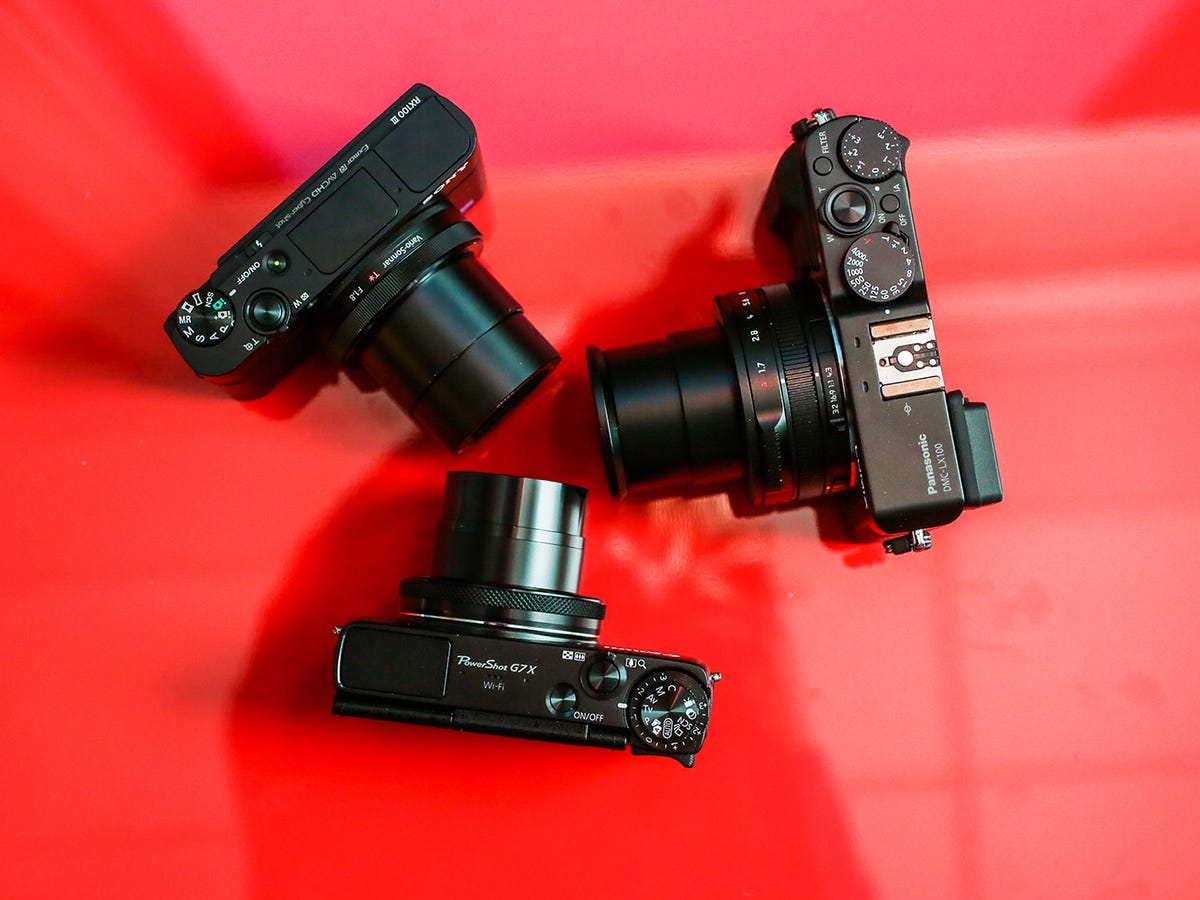
Editors' note: This story is updated frequently to reflect more recent reviews and announcements. The latest version comments on the Fujifilm X100F.
It's a common complaint: You want the photo quality of a dSLR but find you're leaving the camera at home because it's so large.
A lot of the compromises you previously had to make are moot now. These models come with sensors the size of what can be found in a high-end dSLR, the performance that can rival a midrange dSLR and offer the same level of manual control over shutter speed, aperture, support for raw files and other creative features.
These dSLR complements (or replacements) come in two versions: ones with the traditional larger-than-average point-and-shoot design, and the interchangeable-lens models (ILC) which attain a more-svelte-than-dSLR profile by jettisoning the mirror-and-prism optical path (one factor that keeps dSLRs so large). Of course, once you start adding on to the latter models, like tacking on an EVF and even a modest zoom lens, they start to get pretty big. Still, equipped with a kit pancake prime lens like the 17mm (Olympus) or 14mm (Panasonic), they remain quite pocketable. But they also tend to be quite expensive compared with all-in-one models.
On the other hand, fixed-lens models can have better lenses than those that come in the inexpensive dSLR and ILC kits. Kit lenses generally come in 18-55mm, 16-50mm or 14-42mm flavors, depending upon the sensor size, but they almost universally have maximum aperture ranges of f3.5 to f5.6. Many of these models have relatively short zoom ranges, but maximum apertures of f2.8 or better.
However, despite some excellent electronic viewfinders (EVF), you still sacrifice the improved shooting experience delivered by a through-the-lens optical viewfinder. And battery life in the compacts (or in an ILC, for that matter) can't match that of a dSLR. The small batteries in a compact are no match for the power drain of those always-on back displays and viewfinders.
Still to come: the Sony RX100 V and Sony RX1R II; Canon's Powershot G9 X; Sigma's dp1, dp2 and dp2 Quattro; Nikon's DL24-85 and DL18-50; Fujifilm's X30 and X100F and the Leica X-U and X Vario.
Here's my take on how the fixed-lens models stack up.
Sensor sizes
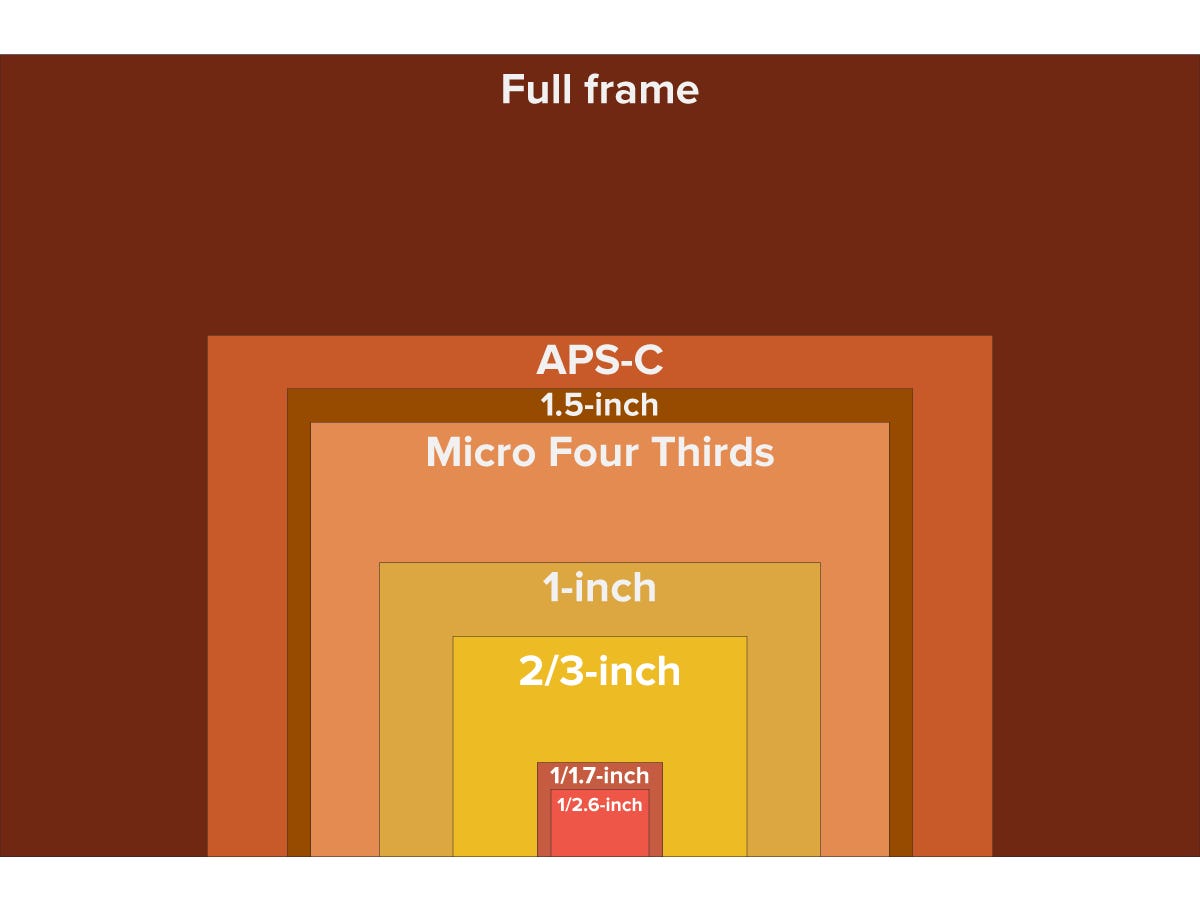
Beyond the advanced controls you get with these cameras, their most defining aspect is sensor size. Once upon a time, a 1/1.7-inch sensor was considered the must-have in this category. Now, you can get them as large as full-frame.
Why does it matter? The bigger the sensor, the better the ability to control how much the background blurs, and generally the better the photo quality. The trade-off is that as sensor size grows, so does camera size. In fact, a lot of the APS-C and full-frame sensor versions of the cameras can only loosely be termed "compact;" they're more accurately described as "fixed lens."
For a while it looked like the affordable APS-C compacts had stagnated: The Ricoh GR II and Fujifilm X100T aren't old, but they're still based on the technology in their predecessors from 2013. Also, Nikon discontinued the Coolpix A. But Fujifilm came back with a new model, the X70, which has a friendlier $700 in the US (£500 in the UK, AU$1,000 in Australia) price than the still-more-than-$1,000 ($1,100, £790, AU$1,600) X100T. Look for prices on the latter to drop, though, now that Fujifilm has announced an update, the X100F, bringing it up to date with the company's latest sensor and autofocus technologies. Plus Leica expanded its X series to include its first submersible model, the X-U, albeit at a budget-bedeviling $2,950/£2,400.
It's not the first aggressive move from Panasonic, either. The company jumped straight from its 1/1.7-inch LX7 to Four Thirds with the LX100. Then subsequently backtracked to 1-inch in the Lumix ZS100, which now boasts the longest zoom available in this class, and the Lumix LX10, which is similar to the ZS100 but with a less zoomy yet still-better lens. While the Canon PowerShot G1 X and G1 X Mark II have a larger 1.5-inch sensor, it's only marginally larger; in comparison, the Four Thirds-size sensor is significantly larger than the popular 1-inch sensors in models like the Sony RX100 series and the Canon PowerShot G7 X Mark II and G5 X which have bodies frequently smaller, yet as full-featured, than the larger-sensored Canon models.
Many of these cameras use BSI (backside illuminated) CMOS sensors, a manufacturing change over standard CMOS imagers which moved the light-sensitive areas (photodiodes) to the top layer of the chip. That move expanded the sensitivity in low light, but initially the quality in bright light wasn't great; they're much better now. The other advantage BSI sensors confer is speed: you can thank it for the onslaught of multishot special effects (like HDR) and high-speed continuous shooting modes.
Sony upped the BSI stakes with its stacked CMOS (branded Exmor RS), a variation which relocated the circuitry off the photodiode layer. Its Exmor RS also has extra on-chip memory and faster circuits, which allows its RX100 V, RX100 IV and RX10 II cameras to do extremely high frame-rate capture (like 960fps for slow motion), 16/14fps continuous-shooting and 4K video.
Best price: Sony RX100
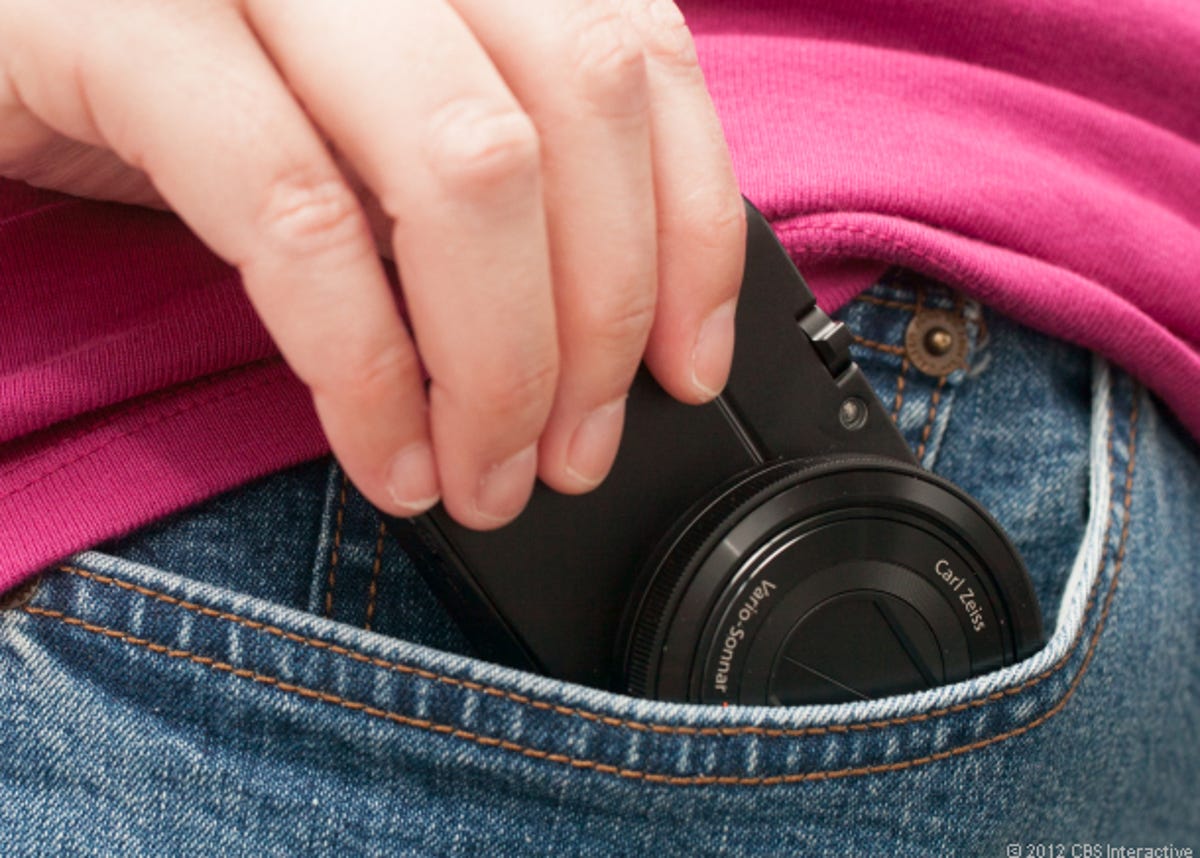
A-a-a-a-and, the Sony RX100 has retaken the slot for the cheapest recommendable compact. Meanwhile, the Fujifilm XQ2 has, for the most part, disappeared from the US, UK and Australia altogether. The RX100 had started to disappear but seems to be more widely available than the last time I checked, at reasonable prices of $450, £350 and AU$600.
If you can find the better RX100 II at comparable prices, that's a better option (they vary enough globally that you may be able to find it for less). The RX100 isn't nearly as good as more-recent cameras, and they both have the old, slow-ish lens, but they're also not nearly as expensive as the better models and still a great step up from a typical point-and-shoot.
Canon's G9 X is intended to compete in this market, and since it has the same imaging specs as the G7 X (but a "meh" lens) it will probably deliver good image quality for this class. The price is finally coming down to a more competitive $480, £340 and AU$600 as well.
Best general-purpose under $1,000: Panasonic Lumix DMC-LX100
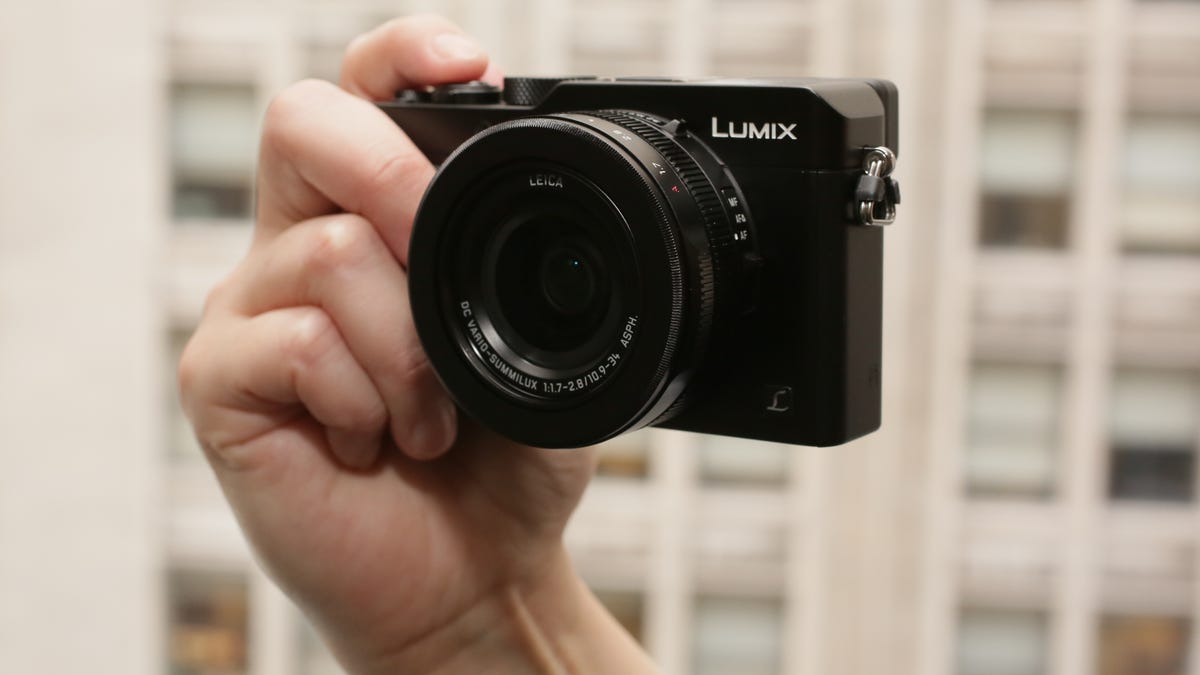
The LX100 is speedy and compact with a fast lens and excellent and video photo quality. However, with prices hovering around $700 (£500, AU$800) -- the new normal for compact cameras -- it's not necessarily the right pick for everyone. The RX100 III ($750, £600, AU$1,000) is also still a great choice. Though the newer LX10 has a 1-inch sensor, it's the same price as the LX100 despite lacking a viewfinder and a hot shoe. Overall it's a very nice camera, but the image quality isn't as good as the LX100's.
The RX100 II may be a better value, especially if you don't care about the tilting LCD; though prices for it are all over the place, some higher and some lower, so you have to comparison shop. The RX100 IV -- more expensive at $1,000 (£715, AU$1,300) -- isn't quite as good for still photo quality, but offers a lot more video controls if that's your thing. It's priced the same as the newer, much faster RX100 V in the US ($1,000, £950, AU$1,600), so you may want to wait until either the reviews of the RX100 V are in or prices on the IV drop.
The Canon PowerShot G7 X Mark II ($700, £650, AU$900) is a decent option, and worth the extra cost over the original G7 X ($600, £680, AU$750). It's faster, with better photo quality. While the speed improvement still doesn't go quite far enough, it does deliver some of the top photo quality for a reasonable price in the 1-inch sensor class.
The more recent G5 X ($750, £580, AU$1,000) is basically the original G7 X, but with a very nice viewfinder and fully articulated touchscreen display. However, though it's not as slow as the G7 X, it has some sluggish aspects, and it lacks the more fully developed feature set of the LX100.
Nikon still hasn't shipped its competitors, the DL series, announced in early 2016. The DL24-85 and DL18-50 are almost identical with only a few exceptions -- most notably the lens, as indicated by the product names. The DL24-85 is the more mainstream-targeted of the two; it has a longer 2.6x zoom, a built-in flash, and at $650 (£550, AU$900) costs less than the shorter-zoom DL18-50 ($850, £680, AU$1,100).
For everyday photography, the two cameras stand out for their fast continuous shooting rated at up to 20 frames per second with autofocus and autoexposure. The 24-85mm focal-length range is a solid choice for most travel, landscape, street and portrait photography, though the longer 10x zoom range of the Panasonic ZS100 might turn out to be more attractive for a lot of people than the Nikon's 3.6x zoom.
The DL18-50 stands out from the rest of this class with the widest-angle lens available in a compact, which makes it more suitable for architectural photography than most consumer compacts. And 18-50mm is a great focal range for street photography, environmental portraits and landscapes.
Furthermore, with its built-in EVF, the LX100 also reigns as the best model with a viewfinder -- at least until I get a chance to test the Sony RX1R II or Fujifilm X100T (though the Sony won't cost less than $1,000 for years, if ever). I think EVFs work better in this class of camera than the small, hard-to-use optical viewfinders of yore. The Canon G5 X has one of the best viewfinders in its competitive cohort, but that doesn't quite compensate for its drawbacks.
The RX100 III and later also incorporate a small but functional electronic viewfinder.
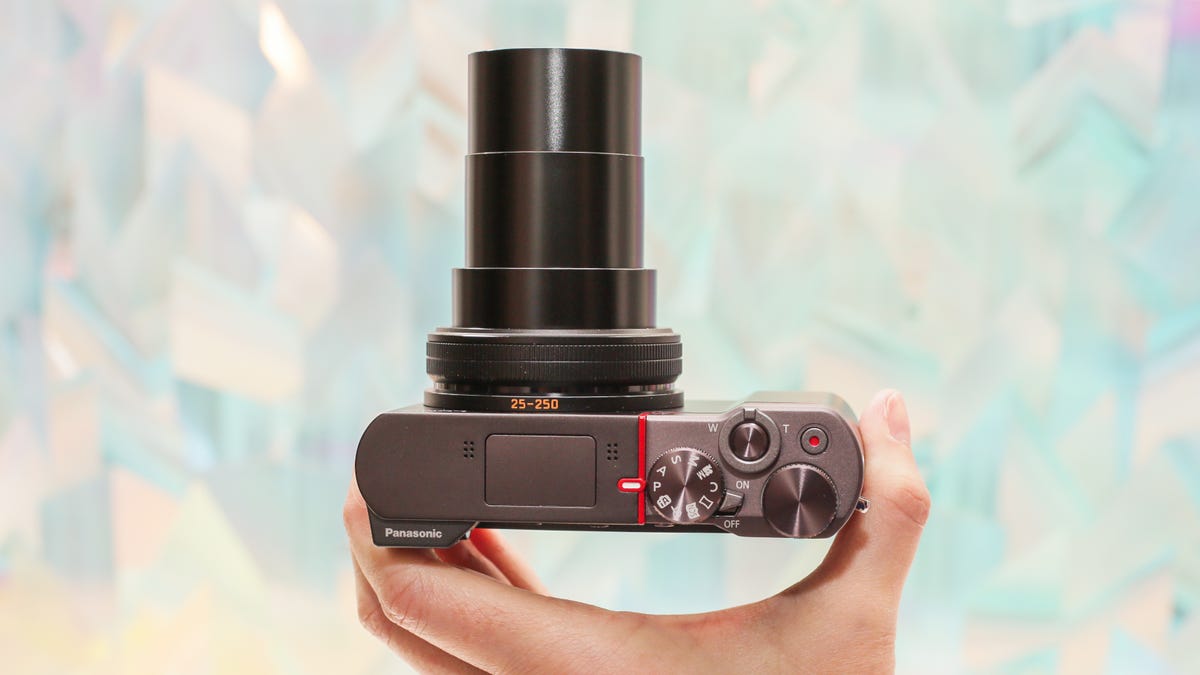
Longest zoom: Panasonic ZS100 (TZ110, TZ100)
While the company classifies it as one of its "travel zooms" rather than an enthusiast compact, Panasonic's ZS100 ($700 in the US; named as the TZ100 for £380 in the UK; dubbed the TZ110 for AU$850 in Australia) has all the manual controls you want, a viewfinder and a 1-inch sensor -- plus a 10x zoom lens, 25-250mm. Unfortunately, at f2.8-5.9 the lens isn't as fast as most of the cameras here, but a lot of people will find that's a tradeoff they're willing to make.
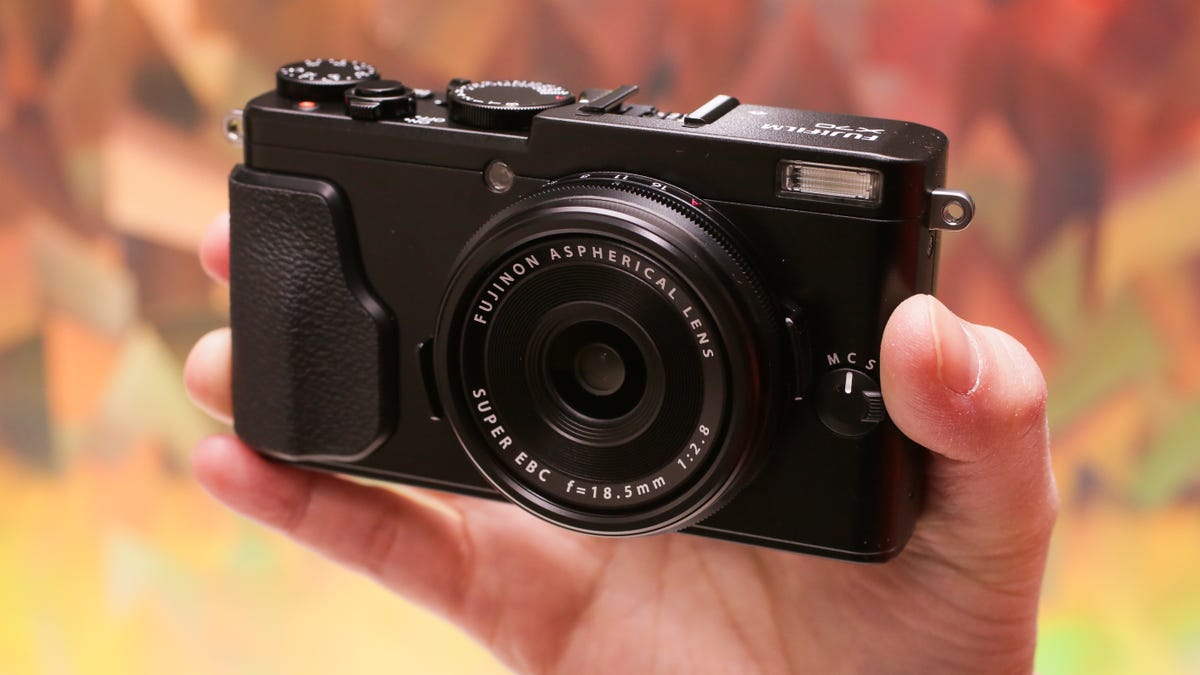
Best photo quality under $1,000: Fujifilm X70
Technically, I should really say the best photo quality under $1,000 goes to Fujifilm rather than a particular camera. The X70 uses the same APS-C size sensor as the three-year-old X100S, and now that the X100S is fading from view its price is rising, generally costing more than the the X70 ($700, £500, AU$1,100). The latter is a little more mainstream, though; it's a lot smaller, with a tilting and flip-up display. The next step up is $1,300 (£780 AU$1,300) for the 2014-era X100T.
The Ricoh GR II ($640, £530, AU$950), which has a relatively narrow feature set, is another current option that produces images with almost as good quality for a tighter budget.
Note that the trade-off you pay for the image-quality afforded by the larger sensor is zoom: all these cameras have fixed-focal-length lenses. For a similar model with a zoom, you'd have to expand your budget to about $2,000 (£1,120, AU$2,500) for the Leica X Vario.
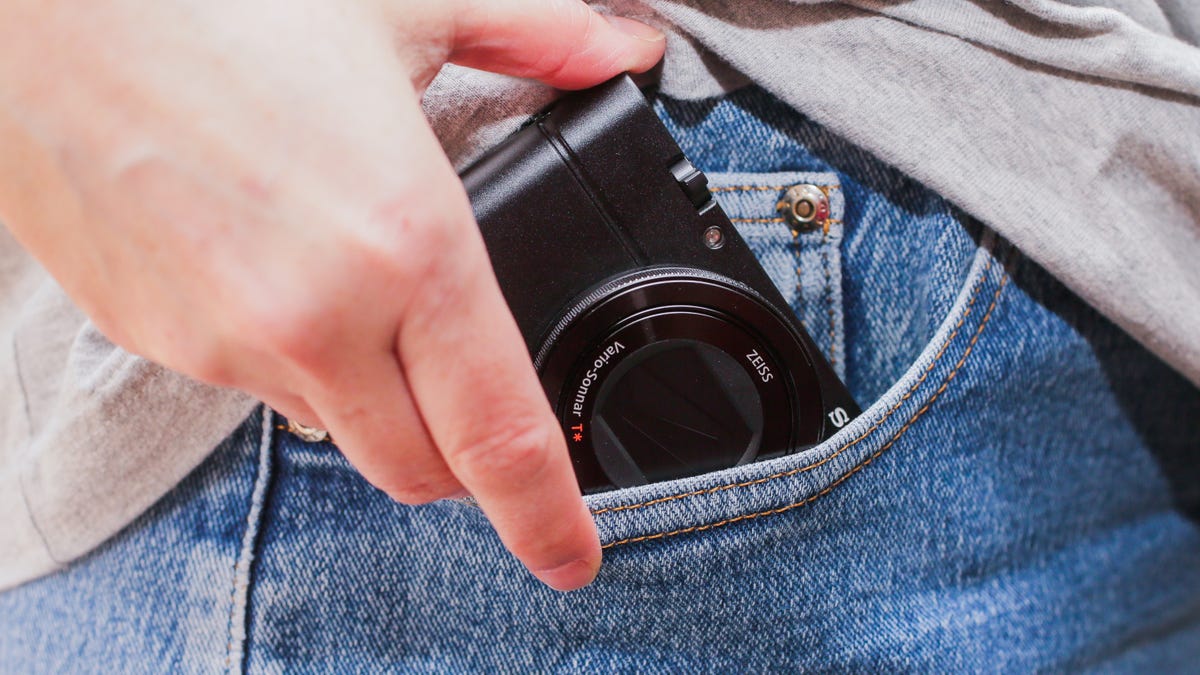
Best for video: Sony Cyber-shot DSC-RX100 IV
The RX100 IV and RX100 V incorporate a 1-inch sensor, but use a new, faster readout technology that allows it to shoot 4K and high frame-rate video for slow motion. It also has a lot of features that serious users need, like timecode and Picture Profiles for different color spaces and gamma settings. However, at roughly $1,000 (£715, AU$1,300) the RX100 IV is on the expensive side for more-casual users. The RX100 V is about the same price ($1,000, £950, AU$1,600) -- at least in the US -- but has more memory and a supplementary processor for much faster in-camera processing. It also has a much-improved autofocus.
The less expensive (and I think better designed) Panasonic LX100 ($700, £500, AU$800) comes in a close second for easy, high-quality 4K movies.
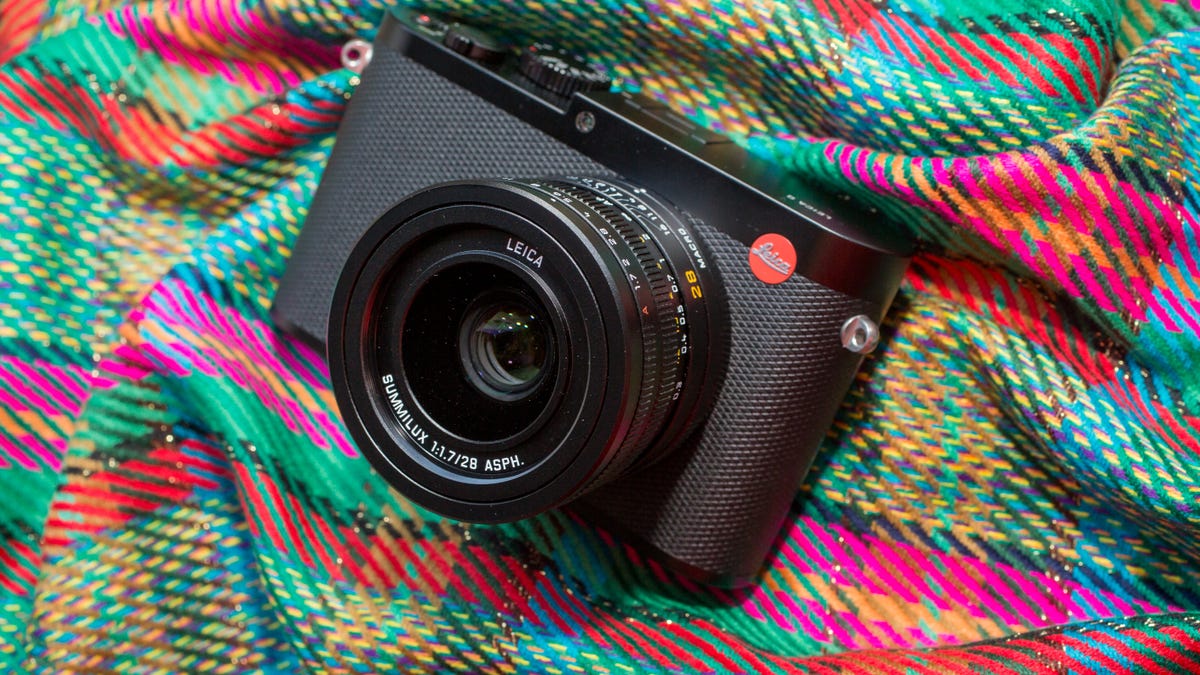
Simply the best: Leica Q
If money is no object, spring for the $4,250 Leica Q (£3,200, AU$6,000). It has great photo and video quality, a stellar lens and an unusually modern feature set for a Leica, which includes decent autofocus.
Don't want to spend quite that much? The Sony RX1 delivers great photos and comes in at a less-gaspworthy $2,800 (£2,100, AU$3,500) but sacrifices amenities the Leica has, including a built-in viewfinder and decent autofocus. It has a sibling, the RX1R ($2,800, £2,000, AU$3,500), which has the same full-frame sensor, but like the Leica Q, has no optical low-pass filter, intended to produce sharper photos for folks who photograph highly detailed still subjects. Given how close the prices have become between the two, the "R" version is probably the better buy.
Sony added a viewfinder, tilting display and updated autofocus with the newer, OLPF-free RX1R II -- and it's still cheaper than the Leica at $3,200 (£2,600, AU$5,500). It looks like it might be a formidable challenger.
More Galleries
My Favorite Shots From the Galaxy S24 Ultra's Camera
20 Photos
Honor's Magic V2 Foldable Is Lighter Than Samsung's Galaxy S24 Ultra
10 Photos
The Samsung Galaxy S24 and S24 Plus Looks Sweet in Aluminum
23 Photos
Samsung's Galaxy S24 Ultra Now Has a Titanium Design
23 Photos
I Took 600+ Photos With the iPhone 15 Pro and Pro Max. Look at My Favorites
34 Photos