- Related Stories
-
Tech manufacturers rally against Net neutrality
September 19, 2006 -
Nokia, Motorola to cooperate on mobile video
September 11, 2006 -
High tech: Anything but green
July 5, 2006
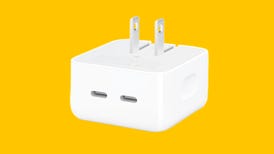
The members of the task force, a project of the European Commission (EC), agreed to include alerts on the cell phones they make that will remind people to unplug their charger once a phone is fully charged. If 10 percent of the world's cell phone owners did this, the group's final report said, it would reduce energy consumption by an amount equivalent to that used by 60,000 European homes per year.
Nokia announced that it will have the alerts in place on its phones by the middle of 2007.
The initiative is part of a pilot project by the environmental agency of the EC intended to encourage industries to "reduce the environmental impact of their products throughout their lifecycle." Groups from various industries looked at everything from raw materials to manufacturing processes to the effects of product decomposition.
Nokia volunteered to start a group for the mobile phone industry, according to the EC.
"We are quite happy with this first approach, though obviously we would like to go deeper. We will issue a report on what has born fruit from this and we will look at, in a year from now, the results. This is an ongoing process and hopefully other companies will come on board," said Barbara Helfferich, a spokeswoman on the environment for the Commission.
In addition to adding the "unplug" alerts to their phones, the mobile group committed to voluntarily eliminating or reducing the amount of certain flame retardants, heavy metals and phthalates used in cell phones. Other commitments included phone recycling incentives and the posting of "eco-fact" panels listing a product's environmental impact.
Notably absent from the commitments was one relating to an early observation, made on Feb. 15, 2005, in Nokia's own report to the EC on the environmental impact of mobile phones (Click here for PDF). It said that one of the mobile industry's leading environmental impacts is the energy consumed during the component manufacturing process. Cell phone power use was the other leading impact.
Helfferich, however, said that the EC did not intend for the voluntary task force to tackle that issue.
"We have other policies in place that encourage limiting the emissions from manufacturing or reducing the energy consumption that is part of the manufacturing process, other ways of detailing that. In the voluntary agreement we don't cover it. And companies--Nokia, for instance--have voluntarily agreed to design for reducing the energy consumption of the actual phones or charger," said Helfferich.
Companies that participated in the EC mobile task force, whose research spanned two years, include AMD, Epson, France Telecom/Orange, Intel, Motorola, Panasonic, Teliasonera, and Vodafone.
The EC listed passenger cars, meat products and housing as having the largest impacts on the environment overall.
See more CNET content tagged:
manufacturing process, impact, Nokia Corp., manufacturing, cell phone


Nokias have turned into such ugly things anyway.
Commission (EC), agreed to include alerts on the cell phones
they make that will remind people to unplug their charger once
a phone is fully charged. If 10 percent of the world's cell phone
owners did this, the group's final report said, it would reduce
energy consumption by an amount equivalent to that used by
60,000 European homes per year."
Ok, so now that you've told me how much energy we can save,
mind telling me how this works? I wasn't under the impression
that chargers use any energy other than when they're charging
phones. Do they suck electricity out of the wall and spit it into
nowhere the rest of the time or what?
If I were Nokia, I would be embarrassed to even mention this "improvement". They (Gov)should slap them (cell phone makers, not just Nokia) with a fine for such a stupid and penny pinching oversight.
I have 3 batteries that my cellphone provider tells me have been overcharged, causing the battery to last a shorter time between charge AND voids the 1 year warranty . Who the heck put their phone in a cradle then set an alarm for 3 hours to go take it out when it's "charged".
Morons, the whole lot of them!
That said, smarter chargers would stop current when battery capacity is reached
I like the ideas to block the charge myself but it's not really the problem. Any device that's plugged in is taking in electricity whether it's used or not. There are hundred of articles out there about so called "energy vampires" doing this and adding to household electricity bills. The solution isn't to stop the charge or wake me up, but rather the consumer actually has to physically unplug that god awful brick from the wall.
- store doors stay open with AC wasted
- by eeemang September 26, 2006 7:07 PM PDT
- Bigger waste is found:
- Reply to this comment
-
(22 Comments)-stores that leave their front doors open in the summer to invite customers while the air conditiong cranks and flies out the door
-parking lot lamps that burn all day long: (ie CompUSA-White Plains,NY;
-highway lamps on all day: (ie Cross County Pkway; Major Deegan Expy, Bronx River Pkwy in NY)
-office buildings that run lights 24 /7 but are open only 9 hours for business (250 North St-White Plains)
-large corporations that leave meeting room lights on with no meetings
-office buildings so over cooled in the summer that people plug in electric heaters
You all have many more examples of waste that is zillions of times more than our 10 watt cell phone chargers.