June 22, 2007 8:55 AM PDT
Week in review: Try to read Microsoft's hips
- Related Stories
-
Week in review: Apple invites Windows users to Safari
June 15, 2007 -
Week in review: Cell phone hang-up
June 8, 2007 -
Week in review: Tech titan togetherness
June 1, 2007
(continued from previous page)
Yahoo lost its lead in the search market to the younger Google in recent years and watched as Google turned search advertising into a cash cow. Yahoo has only a 27 percent share of the search market share compared with Google's nearly 50 percent. Yahoo's stock has dropped about 10 percent from a year ago, while Google's has jumped about 30 percent.
Yang, who ran the company when it was small but lacks Semel's management expertise and business sense, is seen by many as the right person for the top job.
But the move likely will work only with Yahoo's newly named president, Sue Decker, at Yang's side. And some speculate that Yang's only filling the spot until Decker is ready to take the reins.
Still, Yang isn't seen by the staff as a savior. He's more of a behind-the-scenes kind of guy. For that reason, some current and former Yahoo employees also believe that Yang will act as CEO on an interim basis until the company gets back on track or until Decker is ready to take over.
In the aftermath of the executive shakeup, a big question remains: will the board of directors that recently gave Semel a $71 million yearly compensation package answer for its mistakes as well?
A number of influential organizations, such as the advisers at Institutional Shareholders Services (ISS), think a boardroom shakeup isn't such a bad idea. ISS had taken Yahoo's board to task for the last two years for Semel's compensation package, asking that it be tied more closely to the company's performance. But the board argued that the package (Semel has reportedly earned $450 million in six years at Yahoo) was justified in order to retain his talent.
You go, green
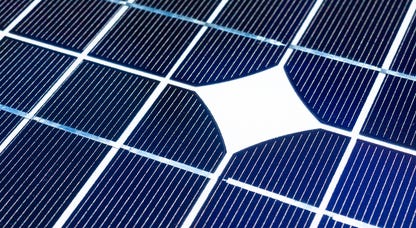
A raft of subsidies and other incentives is making Ontario a hot spot for solar-panel manufacturers and others in alternative energy. This week, the province's government announced a $610 million fund to develop a green technology industry and attract car manufacturers and solar-panel makers. Municipalities will also be able to dip into a separate $206 million fund for retrofitting buildings.
Additionally, the province has unfurled programs that eliminate sales tax on Energy Star-rated lightbulbs and appliances for a year, offer homeowners up to about $4,700 to install energy-efficient appliances, and set a goal of 100,000 homes going solar. A pilot program will also extend zero-interest loans to homeowners who install renewable energy systems. These build on other programs designed to increase demand for solar power.
But solar energy isn't the only renewable resource: there's also garbage. A company called AgriPower will begin production next year on a movable power generator fueled by a wide range of waste products, from walnut shells to discarded tires.
AgriPower's combined heat and power system was originally envisioned for developing countries that could burn agricultural waste to make electricity and heat. The multiple-piece unit includes a large feed hopper that holds five tons of material, and a high-temperature incinerator that vaporizes biomass as it comes in. The resulting heat can be used to turn a turbine to make 300 kilowatts of electricity.
In the market to buy a green house? Not necessarily green in color, but green in terms of energy-efficient features, recycled construction materials and healthy indoor air? Several companies are creating subdivisions out of modular homes built in factories. Mainstream developers have begun to integrate solar panels in the construction process; the solar panels, salesmen report, are something of a status symbol. You can even get a green luxury condo in Dubai.
The demand for green homes and green amenities is growing. Green buildings make up 2 percent of all U.S. construction, according to McGraw-Hill, which predicts that 5 to 10 percent of newly built housing by 2010 will offer several green features. That would bring today's $7.2 billion green residential market up to $38 billion in just a few years.
Also of note
The U.S. Supreme Court threw out antitrust complaints related to companies that went public during the boom in the late 1990s...In response to reports of persistent cybersecurity flaws at the Department of Homeland Security, a top congressional Democrat questioned whether the agency's chief information officer deserves to keep his job...Apple's Safari may not be rewriting the rules for Web browsing on Windows just yet, but it's leading the way with one significant change: photographs with richer color.
See more CNET content tagged:
virtual machine, virtualization, Terry Semel, Week in review, desktop search
16 comments
Join the conversation! Add your comment (Log in or register)
someone may decide to buy only one licence and run it on
multiple macs is broken, IMO.
In fact, as your licence currently does not let you run even a
single copy in a VM, there's now no point in buying the OS at
all.
And if you ARE running it in a VM, there's no point in paying to
become legal as it'll just not happen.
Besides ... why Vista in a VM on a Mac? If you are there you are
using OsX for most things and Windows only for some legacy
stuff or for testing/development (as in IE testing of your site).
In that case you have no reason to buy Vista: just go buy XP.
Is Microsoft now saying that Vista has security problems? I don't think so.
It's about making people buy the more expensive versions of Vista. Any individual, SOHO or small business that wanted to use the less expensive options under virtualization now cannot legally do so. They must buy the more expensive versions.
It's just another extortion method so common from Redmond.
I tinkered with a *cough* "tester" *cough* a while back that was OSX inside VMware on XP. And it was buggy and slow as all get out. Enough so that if I didn't know better I would say OSX was garbage. But I know that it was the VM setup that made it apear this way. But this might be part of M$ thought process.
If Vista would not run well on the VM then why allow it, just to make themselves look bad?
Personally I would like to be able to run OS X in my VM on XP or Vista... (if it would run efficently) but we ALL know APPLE wouldn't allow it. So why the hell is everyone whining about MS not allowing it? Come on... the OSX license comes right out and say you can't run it on anything other than apple branded hardware.
Then again, I'm not dishing out any of my money to Microsoft, either- I'm a Linux guy, but...
I almost don't care anymore. "Oh hey, proprietary software is overly limiting." NO REALLY. What else is new?
Ohh, looks like they've already corrected the headline! Geez, come on C-Net! That was a fun typo, you coulda left it in for a little longer!
I have gone back to XP and W2K. There are enough virus, malware and firewall apps out there to make W2k secure, behind a good router. Budgeting to upgrade equipment to Apple hardware and software.
you are really serious about software you should build your own
hardware" someone said. Nuff said.
Sorta like how the newest games published by them "require" Windows Vista, for no technical reason I can fathom...
Micro$oft: If Vista can't make it on its own merits, why bother?