May 4, 2007 4:00 AM PDT
Vista draining laptop batteries, patience
- Related Stories
-
Vista flexes its power
October 16, 2006 -
Vista beta sucks up battery juice
June 2, 2006 -
Vista's answer to PC power woes
August 25, 2005 -
Not all will see Longhorn in 3D
May 6, 2004 - Related Blogs
-
Lenovo jumps gun on Intel's Santa Rosa launch
April 25, 2007
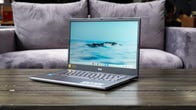
"It's a little scary," said John Wozniak, a distinguished technologist in Hewlett-Packard's notebook engineering department, referring to the work HP needed to do on making Windows Vista more suitable for notebooks.
Vista, while touted as having improved power management capabilities that would make it easier for users to extend battery life, isn't to some living up to that promise. The main culprit appears to be the Aero Glass interface, a spiffy new user interface that makes Vista more pleasing to the eye with transparent windows and animated transitions when moving from one application to another.
When Aero is turned off, battery life is equal to or better than Windows XP systems. But with it turned on, battery life suffers compared with Windows XP.
Microsoft made some important changes in Vista that do improve some aspects of battery life, such as smarter hibernation modes that override applications that want to keep running, and simpler options for choosing a power management setting. But laptop users who spent extra money on powerful laptops to handle the graphics requirements of Vista and the Aero interface are forced to run the aesthetic equivalent of Vista Basic, the low-cost version of Vista, if they care about battery life.
technologist, Hewlett-Packard
HP decided it wasn't going to use the power management settings that shipped with Vista, Wozniak said. The company came up with its own set of power management settings for Vista laptops, allowing users to select different power settings, such as "power saver" or "high performance," that strike a balance between processing power and battery life. Lenovo is likewise using its own power management technologies honed over several years, said Howard Locker, director of new technology at Lenovo.
"They've really made it complex from a power management standpoint," Wozniak said. "The potential is there to do some good things, the bad thing is that it comes with the canned settings...and we didn't like any of them."
Reports that Vista was an energy hog started to surface during beta testing last year. At the time, Microsoft said many of the problems would be cleared up by the time the operating system launched. Of course, this isn't a new issue when it comes to operating system changeovers, said Richard Shim, an analyst with IDC. "When you look at a new operating system, battery life tends to be worse. When Windows XP came out, that was true, and when Windows 98 came out, that was true."
The difference this time around is that notebooks are "the growth engine for industry," Shim said. Notebook PCs now account for more than half of all retail PC sales and are projected to become the majority for the whole market by the end of the decade.
But battery life problems continue to rankle notebook users. As blogger Rob Bushway of Tablet PC site Gottabemobile.com put it, "when a consumer has to buy an extended battery to get what they use(d) to get out of a standard battery, something is really wrong."
More than one company other than HP has acknowledged the demand that Vista and the Aero interface put on a notebook PC running off its battery.
"Vista is consuming more power than Windows XP, but we have been very focused on introducing more power-efficient technologies," said Bahr Mahony, director of product marketing for Advanced Micro Devices' mobile product division.
Most attribute that power use to Aero. "In (Aero) mode, you will drain the battery faster, but you get something in return because it's cool and nice looking," Lenovo's Locker said.
The Aero interface is automatically disabled when users put their Vista notebooks into the "power-saving" profile, one of three new simplified power-management states. While that makes for an arguably duller experience, Microsoft said it commissioned a study (click here for PDF) that found no difference in "responsiveness," or application load time, between a notebook with Aero disabled versus one running the fancy graphics: implying that Aero doesn't put too much of a load on the system.
But the notebook and Tablet PC used in Principled Technologies' test had the power management setting on "high-performance" when testing Aero's performance. At that setting, the notebook won't ever compromise performance to preserve battery life, so responsiveness isn't an issue.
Microsoft isn't deterred by HP's decisions and other criticism. "We actively encourage (PC companies) to customize the default power profiles so that users get the most out of their hardware," Microsoft said in a statement.
A more definitive statement on Windows Vista and battery life should surface soon, with Intel scheduled to release new chips for notebooks next week at the launch event for the next generation of its Centrino technology. Also, Bapco, an industry benchmarking organization, is expected to soon release the MobileMark 2007 benchmark.
Microsoft, for its part, will likely have to improve Vista's battery life performance over time through the release of service packs and other tweaks, Shim said. "The (PC companies) are getting pressure from consumers--who are the notebook adopters--who are saying their number one priority on a notebook is battery life."
See more CNET content tagged:
power management,
Microsoft Windows Vista,
battery life,
Richard Shim,
battery


I mean, I dunno... it just seems to be common sense to me. Don't like it? Don't use graphics-heavy rich applications, games, OS'es on your laptop, geez.
You are running two processors the GPU especially gets hit hard with the Aero interface so even if you are just letting it idle with the no apps running the GPU is still working. In particular for those large wide screen 1920x1200 displays.
I'll bet you couldn't even watch a two hour movie without having to recharge because then both processors will be eating up the battery.
Ahh progress, ain't it wonderful?
Parallels? Anyone have any experience doing that?
spontaneous combustions? Include two batteries with every
notebook until new battery technology comes out? Who knows...
everyone switches to fluorescent light bulbs and upgrades to Vista,
is your electric bill a wash?
Where's Greenpeace?
Sure, you'll only get about half the amount of work done, but it'll look cool.
Think about it. Aero is so poorly programmed it massively contributes to Global Warming, for no reason other than MS can't find coders to keep the UI looking great, but not at the expensive of "energy".
So sad, so sad.
The graphic makers need to develop chips that can do basic DX9 3d using very low power, this is the only way that power consumption in Vista is going to drop.
They're "empowering" their users (to pick up the pieces)
It requires more memory, more hard drive space, 'bigger' CPUs; all of which burn even more energy.
The usual response is turn this, that, and the other options off or to minimum.
Well gee whiz. What kind of an OS do you have then? How many of you can say Windows 95???
Microsoft, did you bother to test this? Or did you, as usual, hire program managers with no common sense again?
Never saw a MacBook get this hot, yet all the nice visual effects (still better than Aero) are turned on.
Microsoft blew it.
- Vista, WHAT'S THE POINT??
-
by jjayguy23
May 4, 2007 12:27 PM PDT
- I've used vista frequently on my Aunt and Uncles HP Pavillion laptop and it sucks. I can't believe how annoying it is. It's features seems so poorly implimented, from the Aero to search. I can't stand it. I will not be using it mainly instead of XP for a long time.
-
Reply to this comment
View
reply
-
-
See all 103 Comments >>