Version: 2008
  • On MovieTome: The 10 worst movies of 2009 so far!

February 9, 2006 4:00 AM PST

Think you got game? These tests will tell

  • 3 comments

(continued from previous page)

The SPA test can cost anywhere between $175 and $225 at health clubs, schools or parks and recreation centers that administer it. For a children's Sports Readiness Assessment (SRA), costs will range from $125 to $150.

"It's a bit expensive and a long, involved test. And a lot of older athletic clients didn't see how it applied to them," said McDonough. "But I could see it would be a valuable tool for some markets, like parents to see where their kids stand--like, 'Hey you've never tried lacrosse; how about lacrosse?'"

Jim Martin, vice president of channel relations at Sports Potential, said the company is developing a group-oriented format that could lower the costs for participants.

The software is a game of math.

Software development was led by Steve Fleck, a former sports physiologist for the U.S. Olympic Committee and former head of its physical conditioning program. Fleck created a comprehensive test to administer to top athletes in various fields. Once it had data on the athletes, as well as data from top field organizations, such as the U.S. fencing or swim team, it began to work with Stanford University's biostatistics lab on a formula for calculating an individual's athletic ability.

Taking the test can be described as a cross between a physical talent IQ test and a summer camp challenge. The evaluation is non-invasive, meaning that Sports Potential doesn't use heart monitors or brain imaging equipment. It includes tests and measurements to assess 14 different traits, including power, endurance, foot speed and coordination.

But before administering any physical tests, the company starts with a 30-minute online questionnaire, asking questions about family history in sports and attitudes toward team and individual activities. Next up is a simple pulse-taking. Last on the list is a measurement of body composition.

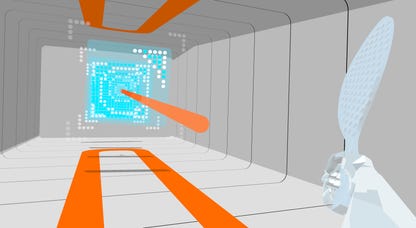
No doubt, the test brings out the competitive edge. The quiz for assessing concentration, which asks recipients to point to and call out numbers from 1 to 100 on a random grid of all numbers within a minute, can stump many people who make it only to number 10.

Balancing your feet on a wobble board for 30 seconds is also harder than it looks. For women, apparently, completing just one pull-up or the flexed arm hang for more than five seconds can be challenging too.

Speed, agility and endurance tests include a 25-meter sprint and what's called the one-turn agility run (people are timed by how fast they can make a turn and return past the finish line). A subject also has to run a lap of 20 meters within a set time limit, with the allowed time getting shorter after each lap. At the point when the runner can't meet the limit twice in a row, the endurance race ends.

For his part, Spinner's own tests told him he could have had been a contender as a speed skater with his speed, height and thigh girth.

"My favorite thing is to find the sports you wouldn't think of," he said.

Previous page
Page 1 | 2

See more CNET content tagged:
Bill Bradley, Spinner, sport, child, Silicon Valley

Add a Comment (Log in or register) (3 Comments)
  • prev
  • 1
  • next
Got Game item - recipe for disaster!
by john_g_brooks February 10, 2006 1:26 AM PST
Give a tool such as this to 'ambitious' parents and more Little League Warfare will break out!

Parents will test their (suffering) offspring for sport suitability with one of two outcomes:

the 'natural couch potatoes' (yes - not every kid can be a star!) will then become disappointing. Do you REALLY want fat and malco kids to add poor self-image to their other limitations?

alternatively, the kid DOES match the parameters for (say) beach volley ball but has NO wish to take up this particular sport. So - more warfare between parents and kid.

Bad idea!
Reply to this comment
guess
by reedsr February 10, 2006 7:26 AM PST
let me guess you were either

A: the natural couch potato

or

B: no good at sports growing up?
More possible outcomes
by grantdavis February 10, 2006 9:51 AM PST
3. A child that is rated at only 'moderately' inept to sports makes it a point to practice as much as possible to overcome what they've been told is their genetic flaw. Regardless of what their parents or peers say.

4. Children realize a little ealier that their fantasy of becoming a pro athlete probably is unattainable, and focus on education as our children generally should.

5. Parents realize their children aren't these natural star athletes they imagine, and do use the results to help the child focus their atheletic development in areas and manners that appropriate for the individual child as opposed to our school's P.E. teachers making every kid attempt the same exercise routines.

I agree first impression is that parents are too concerned about figuring out what their child 'should do in life' and forcing them that direction. But this machine is hardly the 'recipe for disaster'. Obviously the test 'results' from children must be portrayed as only a current assessment and that as children grow into their bodies coordination and athletic ability can continue to develop, or regress.
(3 Comments)
  • prev
  • 1
  • next
advertisement

Latest tech news headlines

RSS Feeds

Add headlines from CNET News to your homepage or feedreader.

More feeds available in our RSS feed index.

Markets

Market news, charts, SEC filings, and more

Related quotes

Dow Jones Industrials (1.42%) 145.56 10,416.03
S&P 500 (1.65%) 18.04 1,111.52
NASDAQ (1.48%) 32.08 2,199.96
CNET TECH (1.12%) 17.75 1,604.93
  Symbol Lookup
advertisement

Inside CNET News

Scroll Left Scroll Right