- Related Stories
-
Clean energy market to clean up
March 6, 2006 -
Kleiner Perkins, PARC warm to clean tech
February 17, 2006 -
Solar star Konarka raises another $20 million
February 14, 2006 -
Calif. solar energy plan approved
January 12, 2006 -
Sunlight powers streetlights, Wi-Fi access
January 5, 2006 -
Start-up drills for oil in algae
May 20, 2005
(continued from previous page)
Even as the industry chases a cheaper kilowatt hour, demand for solar PV systems is on the rise from both business and consumers, analysts say. Clean Edge forecasts that the total solar industry is poised to expand from $11.2 billion last year to $51.1 billion in 2015.
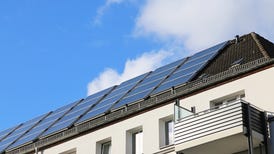
Government subsidies and incentives are an important part of the demand picture, say industry executives and analysts. Germany has perhaps the most aggressive solar incentive program in the world and a large solar market. California has earmarked about $3 billion over the next 10 years to build 3,000 megawatts of capacity in its "million roofs" solar initiative.
The financial community has taken note. Three solar companies went public last year--Q-Cells, SunPower and Suntech Power--raising a combined $800 million.
Because the solar PV industry is so dependent on silicon, many entrepreneurs and venture capitalists can transfer their skills from the semiconductor and IT industries, according to industry experts.
For example, Kleiner Perkins Caufield & Byers, the company that funded IT industry mainstays Sun Microsystems, Google and Amazon.com, recently launched a $100 million "greentech" fund. One company in its portfolio is thin-film producer Miasole.
The spike of investment dollars reflects the growing maturity of the solar PV industry, said Clean Edge's Pernick, who expects competition among solar companies and among countries promoting solar power to go up.
"We're not going to have a future where there is just renewable energy. It's going to be a mix for some time and rightly so," he said. "But people are moving the needle forward very aggressively."
See more CNET content tagged:
solar energy, silicon, photovoltaics, electricity, venture capital


Charell Williams
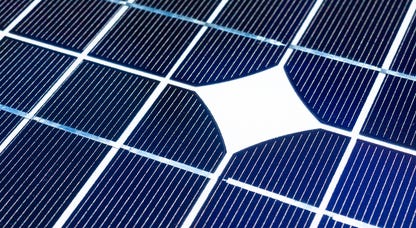
However, one should keep in mind that 10 Megawatts (shown in one of the pictures here) is still too low compared to other power generation plants (which often generate a few hundred or even over a thousand megawatts of power)
I guess the key here would be using this technology to produce power in your own backyard. That way, we'd (hopefully) be able to produce enough power for ourselves and (hopefully) cut the costs down.
I also think that more and more people and companies should be made aware of this opportunity. If a good number of homes/companies install them, more and more people would start installing them as it would work out as social marketing.
That's just my 2 cents though.
Mahurshi Akilla
an added bonus is less power loss due to transmission lines...
Global warming has momentum.
I think the world energy requirements will keep going up, even with more energy efficient devices, because more people are going to be using these devices in the future, and that would lead to an increase in demand.
They use the durable and rugged panels from Unisolar, and bond them directly to their roofing membranes for a 25 year warranty roof that produces electricity from early morning to evening. The Unisolar panels do not use crystalline silicone, so are immune from the shortage, and are made by the mile on a stainless steel substrate.
Del
Any ideas?
enthusiastic supporters of widespread solar energy
developments if I asked for some cost and production numbers?
How much power can a roof sized solar system produce at its
peak?
How much power does the building underneath the solar system
need?
How long will the solar panel operate?
How often does the system need maintenance in order to keep
its output within advertised capabilities?
How much does it cost to clean?
How large are the taxpayer costs per unit of delivered power in
subsidies?
How much do electric utility customers pay for the mandated
uses of the technology?
I have been reading about solar breakthroughs since 1973. Little
has changed except for the cost of the competition and the
quantity of dollars flowing from taxpayers and monopoly utility
companies.
I believe that there is a very good reason why BP spends a tiny
portion of its annual revenue on solar energy and then spends
even more promoting its resulting image as a company that is
"beyond petroleum".
enthusiastic supporters of widespread solar energy
developments if I asked for some cost and production numbers?
How much power can a roof sized solar system produce at its
peak?
How much power does the building underneath the solar system
need?
How long will the solar panel operate?
How often does the system need maintenance in order to keep
its output within advertised capabilities?
How much does it cost to clean?
How large are the taxpayer costs per unit of delivered power in
subsidies?
How much do electric utility customers pay for the mandated
uses of the technology?
I have been reading about solar breakthroughs since 1973. Little
has changed except for the cost of the competition and the
quantity of dollars flowing from taxpayers and monopoly utility
companies.
I believe that there is a very good reason why BP spends a tiny
portion of its annual revenue on solar energy and then spends
even more promoting its resulting image as a company that is
"beyond petroleum".
You asked for numbers. Here goes:
Each bay of HelioDynamics Harmony CHP solar system produces around 500 We peak and 3 kW-thermal, at temperatures near to water boiling point, at noon.
Over the year, in Central Valley, California, plan on 1000 kWhe per bay of power and 6000 kWh of heat per bay. Using the heat to power an absorption chiller will save around 2000 kWhe of power for air-con. Each bay requires 150 sq ft of roof area. By shading a translucent roof membrane, it will also displace a further 300 We of lighting, saving around 1000 kWhe of lighting power each year.
For a piublic, commercial or industrial building, the building could see a major reduction (>50%) in its energy demand from grid energy.
Design life - 30 years. Actual life - if maintained: indefinite.
Self cleaning keeps maintenance visits to 1/year.
Subsidies - my question is what is implied subsidy of the fossil fuel industry in having a licence to foul up the thermostat setting of the planet?
And we use only 3% of the silicon to achieve this compared with flat plate solar. The world has just been changed, my friend.
949.722.8704. You can also watch the video featuring Morgan
Freeman and Ed Bagel jr, at this url
www.jointhesolution.com/kevinbirch
Go Ostriches!
owlafaye
949.722.8704. You can also watch the video featuring Morgan
Freeman and Ed Bagel jr, at this url
www.jointhesolution.com/kevinbirch
WHAT A HUGE WASTE OF MONEY ALL BECAUSE ENVIROMENTALISTS CAN NOT ADMIT THEY WERE WRONG ABOUT NUCLEAR POWER. Even the French figured it out.
- by JRJHOME June 14, 2008 3:28 PM PDT
- I am living in a place that cost .50 cents a kilowatt!!! New energy solutions need to be made affordable so people can switch from using the utility companies.. I do a lot of research but the utility company is still cheaper per kilowatt, than me investing in products that cost a small fortune. I don't plan on being here long time but I would make purchase's that would lower my kilowatt usage.
- Like this Reply to this comment
-
(24 Comments)