- Related Stories
-
Appeals court upholds Net-wiretapping rules
June 9, 2006 -
House plans vote on Net neutrality
June 7, 2006 -
Senate panel to revisit Net neutrality proposal
June 7, 2006 -
Watch out we don't neuter the Net
June 1, 2006 -
Net neutrality fans pressure U.S. Senate
May 24, 2006 -
Politicos propose new action on Net neutrality
May 18, 2006 -
Hardware firms oppose Net neutrality laws
May 17, 2006
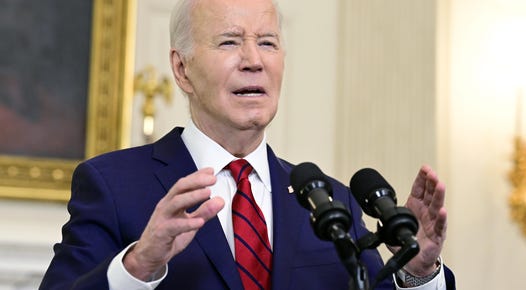
As Verizon Communications' executive vice president for public affairs, policy and communications, Tauke has spent the last few months embroiled in a fiery debate over Net neutrality, the concept that broadband providers must be legally required to treat all content equally.
And now he's won. Thursday evening, in a testament to Verizon's lobbying prowess, the U.S. House of Representatives definitively rejected extensive Net neutrality regulations in a 269-152 vote.
Now the telecommunications bill approved by the House heads to the Senate, where Sen. Ted Stevens, the Alaska Republican who heads a key committee, has been an ally so far. But in an apparent nod to companies like Amazon.com, eBay and Google that are pressing for Net neutrality rules, Stevens did say last week that he might be willing to bend and consider more regulations.
Tauke, a lawyer, is a former member of Congress from Iowa and former chairman of the United States Telecom Association, a telecommunications trade association.
CNET News.com spoke with Tauke about Net neutrality and Verizon's view of what Washington, D.C., might do next.
Q: What's your reading of Thursday night's vote in the House?Tauke: We were very encouraged by the vote on Net neutrality, not only because it was a strong vote rejecting the Markey amendment, but also because we had 30 percent of the Democrats join us despite really strong pressure from the Democratic leader. We felt that in both cases the votes were strong and set the right policy direction.
(Editor's note: Rep. Ed Markey had offered the amendment mandating Net neutrality that was far more extensive than the rules already present in the bill. Click here for PDF of the amendment.)
So now we start talking about the Senate, which is sometimes more difficult to predict.
Tauke: The Senate is always an interesting challenge because the process is more open. We'll see how it unfolds.
It's fair to say that Stevens is committed to moving a bill. He'll probably have a new draft in the next few days. He seems anxious to have the committee move in the next few weeks and have it to the floor in July. That's a tight time frame.
Our hope is that Sen. Stevens and the committee will see the wisdom of trying to hold this bill to a relatively narrow set of issues rather than have it become a bill that addresses all of the issues that arise in the telecom space.
Won't it be easier for you to block a bill you don't like than for its supporters to get it enacted?
Tauke: It seems to me that there are two options. One is you get a bill that covers an array of issues and has broad bipartisan support. Or you reach a situation with senators saying, "We agree on these issues now and let's move on those."
Because of the urgency of addressing universal service, we think there may develop a desire to take those things that (have broad agreement) and move those. But you never know what might happen in the Senate. If this becomes a bill that includes every issue that falls into the telecommunications space then (it may become too controversial to go anywhere).
Do you think there's enough time before the November election for a final vote to happen?
Tauke: The big challenge is a floor vote in the Senate. If you can get the Senate to act on the issue, the chances of getting a bill through (a conference committee) are very high. The real challenge from a procedural perspective is being able to move through the Senate floor, in part because of the nature of the Senate and the need for relative consensus to develop.
What do you think of the not-entirely-serious proposal from Rep. Charles Gonzalez, a Texas Democrat, that would extend the concept of Net neutrality to Web sites like those operated by Amazon.com, eBay, Google and Microsoft? Would you support something like it as leverage against them?
Tauke: We have never tried to visit the worst aspects of regulation on other industries. There has always been a time when people have said, "Let's dump this on cable." Generally our posture has been that if regulation is hindering the development of an industry, we ought to get rid of that regulation, not visit it on others. I don't think we have any interest in visiting those proposed regulations on Microsoft, Amazon, Google or any of the other players in the Internet space.
It has puzzled me, however, that these companies have supported even the language in the Barton legislation. Principle No. 4 (click here for PDF) in the Barton language covers not just us. It covers application providers. Isn't that what Microsoft, Google and Yahoo do? Could eBay strike the deal they did with (Yahoo over) PayPal? I don't know if they could if the policies in the Barton bill were implemented.
The Net neutrality issue needs to be very carefully reviewed. We need to understand the problem we need to solve and be very precise in the language that's enacted in the statute. We've considered ourselves in the past champions of Net neutrality. But now that Net neutrality is so amorphous and covers so many things, we get nervous about sloppy language, unintended consequences and regulation down the road.
What precisely do you believe you couldn't do if Rep. Ed Markey's Net neutrality proposal had been adopted?
Tauke: The way we read the Markey amendment, we may not have been able to offer video services in competition with cable if his amendment had been adopted. Certainly we want to be able to offer the video services. We obviously believe that's in the consumers' interest.
See more CNET content tagged:
Net Neutrality, vote, amendment, bill, committee
26 comments
Join the conversation! Add your comment
This is proof that what they have said all along is a lie. From the beginning they, Verizon, have said, "there will be no degradation of service for any content providers." Now we know they are liars.
balanced presentation and a explanation of what is going on?
I included about a dozen links in this story to previous articles that did explain what's going on. Why n ot follow them?
Defined: Net Neutrality = No carrier can give preferential service or express service to any content provider over another. No Carrier can intentionally degrade other packets to give this preferential treatment.
It basically breaks the internet into two. the Haves and the Have nots. If you are a content or service provider you will have no problem paying the Ogre under the bridge, if you're not....well...proceed at your own risk.
Yes. That is a VERY possible outcome if the curent net neutrality bills had been enacted into law.
Some services deserve higher priority than others. Curent anti-monopoly laws can and HAVE been applied to the fears of the Mr Joe citizen. On the east coast of the US (sorry I can't find the link or the names, been too long) there was a story about how a local ISP actually degraded and then BLOCKED a local competitor's website and services from being accessed by their customers. The courts ruled that this was anti-competative behaviour and thus illegal. The courts forced the bad boy ISP to not just unblock, but stop degrading the network to their competitor.
With the local loop being physical fiber or cable, and there not being any real range of competition, the local carriers are effective monopolies and will be held accountable as such.
So you see, we already have laws that can be effectively applied to "net neutrality". We don't need a bunch of knee jerk laws that will ultimately harm the consumer and possibly even cost some consumers their lives!
The network neutrality ranters and ravers are behaving as illogically and badly as the people that tied themselves to trees in the 60s and 70s in my opinion.
All services are not equal, but service providers that pay "fat checks" may not really provide Most important services.
911 should be government regulated outside of any telecom or business bill because it's more important. I don't see what net neutrality has to do with this.
Your other example was because ISP's were blocking other ISP's, that's why it's anti-competitive. There would not be the same outcome if verizon's routers decided that they didn't want google flowing through there anymore.
Secondly, ISP's are not the same as the line providers.
What is it that Drives us to the point, where
we can not see other only the Self.
It is this that History tells us Plainly, and
that is that as a Nation, things go well when
we are taken as a Whole and Are a whole People.
So what is this talk got to do with Tech. Talk,
a Whole lot!
Think of the facts, the Access and the whole
of the World, in the catch-up mode. the so called
Un-Educated, ( that is the people who we study all the time) and the well intented, who are so
much involved with the Medium to which they are
in contact that they, I do, forget the reasons that it is of any use at all, ' We can use it'.
If anything can bring us back to a sense of things, which does not include , "profit", as
the only reason for Being, it should be that
as a Nation we are now, not at all in Representation, of our Constitued Self.
I only hope the written word could fix the
Problem. The fact is, it can't be just cost ac-
counted out of the picture, we are not changed
over-night.
So in the short run on the Table the Issue is
spoken of in the small sense, but the Use-age
is growing to the point that If you are not in
the System's, you are out of Existance.
This is the fact and we have to bring, our
thinking to a place, where It Is Service not
Profit, Viability, to promote what is the basic
Need, which is everywhere for us to see and feel.
" It is service of the Business Entity, which
gives it Value, and with out that in Play, it
shall Lose ALL, Value to the World."
Yours Truly,
Michael Trager
PS. History is a good teacher.
Maybe I am just a simpleton since I read what he says but don't really understand.
So here is a question that I would ask Mr Tauke that only requires a simple "yes" or "no".
Here goes: I am a verizon DSL subscriber and Verizon offers a VoIP service and Vonage offers a VoIP service. I choose to use the Vonage VoIP service instead of Verizon VoIP service. Will Verizon do ANYTHING to the Vonage packets that traverse Verizon network infrastructure? Or will they be treated the same as any other packet including Verizon VoIP traffic? You could substitute and other service offering(like video)but I chose VoIP.
Now Mr Tauke a simple yes or no answer.
1. watch the chickens
2. keep current data on how many chickens there are
3. provide said data to the owners when requested
4. that 15% of said chickens may go missing per month
5. if missing ckickens exceeds15% penalties will be paid
6. increase costs to cover any expenses forseen or unforeseen
7. no one can tell contractee what to do because "free" markets
will dictate ethics and performance
Keep up the good work. I've criticized you in the past when I felt you weren't getting the story right in your opinion pieces, so it's only fair to compliment you.
Imagine the effectiveness of Microsofts One Care with a little bandwith squeeze. Or e-Bays online auction, or Google's little enterprise. But no, one depends as much on the other. So just where does the squeeze come. Voip..porn was suggested.
Yes. I think that's what is really needed. Telecoms reading their internet traffic, who's doing what, and regulating the need for bandwith on a per use basis. Just saying this makes me feel so much better.
1. I recall a time in american history when the struggling store owner used to have to pay a locally syndicated "family" for "extra services" too. Did anyone get confused into thinking that they were actually "protecting" the small business person? No. The "family" was both the threat and the protection. Corporate giants like Verizon are proposing they "create" a problem like "segregating" services and then ask us to pay more for the services they have taken from us. Wake up everyone! The new syndicate is attempting to move into the global neighborhood!
2. Imagine if you bought a new hybrid eco-contious sportscar but just before getting on the on-ramp of the highway you come up to a gate that says "verizon". The dude at the gate doesn't even pretend to own the highway or even the on-ramp. In fact, he didn't create the ideas that produced the highway, or cars, or the fuel that moves them. But since he owns the gate he is going to control the entire thing. Just as importantly he explains to you that your new sportscar is manufactured by a company that has not decided to respect their gate, so he is going to tell you to pay a fee and you can only drive your car in the 30mph or slower lane. Varooming past you goes a gass guzzling smogg pumping SUV with advertising pasted all over it. Sadly we will all be riding our cars on local streets since regular people won't be able to afford the highway anymore.
The last insitution of free communication in the US is Amature radio. Ham Radio as it is called is regulated to ensure a free non-commercial experience. As for the Internet as we know it, we opened the medium up to commercial and non commercial usage. But the commercial vision is taking over but more importantly taking it away from us.
No matter how you slice this, taking something away only to charge us "protection" fees later to get it back again is defined by a very familiar and fraudulant term in the english language:
extortion.
Verizon and the other telcos, late to the game on content (they're only now trying to compete with the cable companies on video distribution), want to get a "taste" of the already-successful content providers' (Google, Ebay, others) profits. The telcos have long lobbied against state taxation of their internet transport, arguing that the real value to be taxed was in content (I know, I lobbied for them and right alongside them). They argued that taxing the internet, on the end of things away from the consumer, was cowardly on the part of states and would, in any event, be passed through to consumers in increased costs. However, this is exactly what they are proposing. They want to exact tribute on the end of the internet farthest from consumers, on the argument that the most successful content providers are eating up too much bandwidth. Those content providers already pay for the bandwidth they use.
And it's not like the transport providers really have anything invested in the network. Verizon itself is only recently starting to put much money behind FTTP/FTTH. For the past ten years, they regularly stated "we need better depreciation rules, we need relief from the '96 Act, we need cheaper capital, we need dividend tax relief for our shareholders" before they could deploy high-speed data lines.
Verizon owns the near-obsolete "local loop," an asset they built up over decades as a monopolist. It now owns old UUNet - something it picked from the bones of WorldCom/MCI when it scarfed up that IXC for pennies on the dollar (after bitterly complaining of WorldCom's bankruptcy to any policymaker that would listen). So it does own something, but we shouldn't give that something much weight, acquired in such robber baron fashions.
Verizon's lobbyists used to complain about competition from wireless telephony incessantly, stating that their local loop was being bypassed and thus they werent a threat to monopolize that local loop anymore. This argument holds no water when one realizes that the bulk of wireless telephony is owned by the RBOCs (95.9 million lines out of 157.1 million).
I remember a SNL skit on AT&T which concluded with the tagline Ma Bell Well Be a Monopoly Again. What started out as 11 major telephone players in 1984 the original seven RBOCs, GTE, AT&T, and MCI is now down to four players, Qwest, BellSouth, SBC Communications, and Verizon. It is generally acknowledged that SBC and BellSouth will merge, bringing that number down to 3. Saturday Night Live was right to distrust the phone companies in the 80s, and we would do well to continue that distrust today.
Verizon and the other telcos, late to the game on content (they're only now trying to compete with the cable companies on video distribution), want to get a "taste" of the already-successful content providers' (Google, Ebay, others) profits. The telcos have long lobbied against state taxation of their internet transport, arguing that the real value to be taxed was in content (I know, I lobbied for them and right alongside them). They argued that taxing the internet, on the end of things away from the consumer, was cowardly on the part of states and would, in any event, be passed through to consumers in increased costs. However, this is exactly what they are proposing. They want to exact tribute on the end of the internet farthest from consumers, on the argument that the most successful content providers are eating up too much bandwidth. Those content providers already pay for the bandwidth they use.
And it's not like the transport providers really have anything invested in the network. Verizon itself is only recently starting to put much money behind FTTP/FTTH. For the past ten years, they regularly stated "we need better depreciation rules, we need relief from the '96 Act, we need cheaper capital, we need dividend tax relief for our shareholders" before they could deploy high-speed data lines.
Verizon owns the near-obsolete "local loop," an asset they built up over decades as a monopolist. It now owns old UUNet - something it picked from the bones of WorldCom/MCI when it scarfed up that IXC for pennies on the dollar (after bitterly complaining of WorldCom's bankruptcy to any policymaker that would listen). So it does own something, but we shouldn't give that something much weight, acquired in such robber baron fashions.
Verizon's lobbyists used to complain about competition from wireless telephony incessantly, stating that their local loop was being bypassed and thus they werent a threat to monopolize that local loop anymore. This argument holds no water when one realizes that the bulk of wireless telephony is owned by the RBOCs (95.9 million lines out of 157.1 million).
I remember a SNL skit on AT&T which concluded with the tagline Ma Bell Well Be a Monopoly Again. What started out as 11 major telephone players in 1984 the original seven RBOCs, GTE, AT&T, and MCI is now down to four players, Qwest, BellSouth, SBC Communications, and Verizon. It is generally acknowledged that SBC and BellSouth will merge, bringing that number down to 3. Saturday Night Live was right to distrust the phone companies in the 80s, and we would do well to continue that distrust today.
On the other side telecoms want to get money back they will invest into networks. Telecoms also want to earn some profits. Someone has to give money to upgrade core networks. But after some period the competition is needed so clients get new benefits.
Huge companies aren't creative and fast. They will try to lock customers within its service and treat them like cash cows. That's way after some time, for example 4 years after client got exclusive high bandwidth access to ISP premium content, this high bandwidth should be available to other companies.
The internet is a pipeline of services built on the basic capability to transport bits from one place to another. Some of the services to be transported were well defined in the beginning, such as email capability, and some were left for later innovation, such as instant messaging and the web. Some services were born through a commercial innovation process, such as Voice over IP. Digitized voice has been around for a very long time but the application of some of those principles to a commercial need, namely the efficient and more cost effective transport of those voice calls for the consumer, has lead to competition for the carriers such as AT&T and Verizon. It is important to note that those carriers have the capability to know and understand what data is traversing the internet backbones and access links they provide. They know where the traffic originates, where it terminates and how much of it there is at any point in time. It was not until competition for their basic services, those that are threatening their greatest cash generators, arose that they began to lobby for the right to change the business model for commercial services across the internet. Both of the above carriers have fought business forces to see to it that they are fully engaged in the wireless services business, the first and largest threat to their basic services (read cash generators). They had every right to create a wireless service business for themselves, some more frequently than others (read AT&T). At the same time they had every right to create the same businesses that Google, Yahoo, and Amazon created. What they lacked was the innovation to do so.
Now we are presented with the thought that the very basic promise of the internet, the creation of services free of anticompetitive forces from the providers that carry the traffic, has now been legislated away. In fact, the carriers have lobbied for and received the endorsement from Congress to be granted the anticompetitive tool to charge any business for the right to be treated fairly in the transport of its product across the internet. They chose not to create the same products and services that Google and Yahoo and Amazon provide even though their position of backbone provider afforded them the opportunity to know more about those services than anyone else on the planet. Their lack of forward thinking is now being rewarded by backward thinking. Send your lobbying crew to Washington with truckloads of dollars (from your diminishing cash cow) and ask for and receive the right to tax successful businesses or else you will choke their business models. Sounds anticompetitive to me, just the behavior the anti-trust folks look for.
The carriers were granted the public trust when they accepted the responsibility for the care of the internet backbone. Now they have found that they are playing catch up for their lack of innovation. They have asked for the tools to stop such innovation by others. What is mind boggling is that they have receive it.
If you are looking for indications of anticompetitive behavior on the part of the carriers, look no further than the present. It has already started. Want a solution? Go back to the carriers and tell them to stop crying because they did not think of more innovative ways of making money using the internet. The carriers have some of the best technical minds on earth at their disposal. What is missing is good business horse sense.
Respectfully,
Bill Trussell
Managing Director-Networking
TheInfoPro