- Related Stories
-
Green tech powers forward
January 16, 2008 -
Eco-friendly toxic cleanup is a blast
March 5, 2007 -
Killing bugs with nature
April 11, 2006
The Livermore, Calif.-based company has developed systems that kill fungi and other microorganisms on vegetables, fruit and in bottled drinks without altering appearance or taste. Novazone's principal agent: ozone, the three-atom molecule of pure oxygen.
Ozone-disinfecting systems for keeping hot tubs or individual rooms clean have been around for several years. But by harnessing ozone for industrial applications, Novazone says it can help reduce the amount of chemicals food producers spray on their harvests, as well as take a big chunk of the $36 billion market for industrial pest killers. The spinach recall of 2006, which happened because growers didn't adequately clean their products, underscores the potential market, according to Dave Cope, Novazone's CEO.
"If you use enough chlorine, you won't have E. coli in your spinach, but people want fresh, safe food," said Cope, who came on board with the company in 2004 after spending years in the computer industry. "When you get really smart, you use natural processes. This is not some tree-hugger perspective."
Chances are, you've indirectly experienced the company's products. The makers of Dasani, Arrowhead and Aquafina have adopted Novazone's systems to kill the microbes in their bottled waters. One of the manufacturers even uses ozone to disinfect the bottle as well as the water.
A significant percentage of the California citrus crop as well as the produce coming from Chile and Mexico get "Novazoned" while in storage. Colgate-Palmolive and others also use it to purify contact lens solution, toothpaste and toilets.
"All the things you never think about but that you need to be mold-free" is how Cope described the market for Novazone systems.
Novazone also can be viewed as a poster child for the connection between Silicon Valley and clean-tech companies. Although many people may not have heard of it, Novazone has been around for years. In its earlier days, however, the company didn't focus on any particular application; it made ozone systems for zoos and aquariums and a number of other one-off productions.
Then, in late 2004, Foundation Capital, among others, invested in the company and brought new executives, among them Cope, a veteran of Internet-era darling Marimba, as its chief marketing officer. (Cope became CEO of Novazone in 2006.) The company decided to concentrate on the food and water business and expand from there as cash flow and success permitted.
While Novazone has carved out a niche in ozone, the company competes in the wider market for new cleaning and purification technologies for food, water and other substances. General Electric and Siemens have made significant investments in this area, and a number of start-ups have begun to emerge.
Cope declined to state current revenue but said it is growing. So far, the company has raised $17.6 million in venture capital. And it's refining its technology all the time.
How it works
"Killing is about time and concentration," he said.
The raw material for the system, oxygen, gets harvested from the air. A ventilator from the top of the unit sucks air from inside a room. It then compresses the air and filters out nitrogen and moisture to get pure oxygen. The oxygen is then passed through corona discharge cells, which deliver a jolt of electricity that turns O2 into O3.
Video:
Biopesticides: Little organisms solve big problems
A look at good vs. destructive bacteria.
"Think of that as a mini-lightning storm," Cope said.
The ozone is then piped into water, or sprayed as a gas over fruits and vegetables. The leftover from the process are oxygen and nitrogen, making the process environmentally safe. By contrast, chlorine leaves a chemical trace on fruit and requires employers to use expensive handling procedures. Ozone can also be piped in on a regular basis.
Sensors monitor the flow of ozone so that it stays within a minimal range of 100 to 300 parts per billion. Large concentrations of ozone can be harmful to people. A good portion of the company's key intellectual property is based on software to get the sensors, computers and the ozone manufacturing system to interoperate dynamically.
Demand for the company's systems, which sell in the $100,000 and up range, is largely being driven indirectly by consumer demand. Organic foods are the fastest-growing segments in agriculture and the grocery market, and such foods can't be treated with chemicals. Several companies such as Agraquest have developed biopesticides that kill field pests with hormones or other bacteria.
See more CNET content tagged:
fungi, substance, food, California, CEO


Bacteria, viruses, and microorganisms would probably be the only things affected by ozone.
'cause only Popeye will eat it?
plants that need oxygen. Bind all the oxygen into O3 and they can't
breathe.
This is a very good example of why software patents should be protected from patent pirates.
====
The Professional Inventors Alliance USA was created more than a decade ago to protect American invention and encourage innovation. American inventors saw a need to track congressional legislation and federal policy that impacts independent inventors, small and medium-sized businesses and colleges and universities. The Alliance is the premiere organization in the nation, providing independent inventors a united voice in order to improve public policy.
The Alliance provides legislative counsel, congressional updates and strategy development to its members through a number of vehicles. Additionally, through its speaker?s bureau, Alliance members have an opportunity to provide expert opinion to many of the nation?s top-tier business, technology and mainstream media organizations. Over the years its members have testified before Congress, offered counsel to key Senate and House committee members, and successfully pushed legislation to protect America?s independent inventors.
Since its inception, the Alliance has grown into one of the most vocal advocates for America?s patent system.
Examples of areas of our expertise include David Vs. Goliath patent litigation, patent reform, and we have a unique view of patent pirating companies who are associated with the "Coalition for Patent Fairness".
Ronald J. Riley,
President - www.PIAUSA.org - RJR at PIAUSA.org
Executive Director - www.InventorEd.org - RJR at InvEd.org
Washington, DC
Direct (202) 318-1595 - 9 am to 9 pm EST.
the food with ozone while in transit and in storage? What's to stop
trucks and warehouses from having ozone generators, just as they
have refrigerators?
- Add O3 to my fridge?
- by gthurman March 15, 2007 12:15 PM PDT
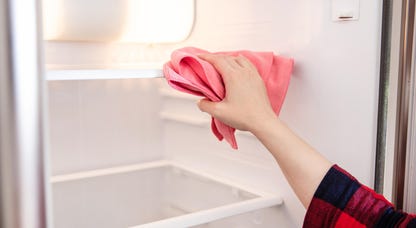
- If it does all that much good, how about a small unit to extract O2 from the air, convert to O3 and spray in my fridge? It probably wouldn't take much O3 and would be more pratical than an Internet terminal in the door.
- Like this Reply to this comment
-
(11 Comments)