August 10, 2007 4:00 AM PDT

Newsmaker: How filmmaking is like launching a start-up

See all Newsmakers
How filmmaking is like launching a start-up
Related Stories

The high-tech future for the Army

August 2, 2007

At Sundance, a blend of art and tech

January 26, 2007
newsmaker Charles Ferguson's tech industry career ended a decade ago with the sale of his company, Vermeer Technologies--maker of a visual Web site development tool called FrontPage--to Microsoft for a whopping $133 million.

But while he has since forged a completely different path as an author, self-described "policy wonk" and life member of the Council on Foreign Relations, Ferguson still reflects on those formative years running a software start-up, a job he says is not too different from his latest venture as a documentary filmmaker.

Ferguson's first film, No End in Sight, hits theaters in major U.S. cities Friday. He sees his documentary, which won a special jury prize at the Sundance Film Festival, as a nonpartisan analysis of how the U.S. occupation in Iraq evolved into a violent quagmire.

On the eve of his film's theatrical debut, Ferguson talked to CNET News.com about how he traveled in Baghdad with body guards in armored vehicles, what he hopes to accomplish with his film, and how technology played a role in his moviemaking.

Q: How did you end up choosing the war in Iraq as the topic for your first documentary?
Ferguson: I had a substantial academic and policy analysis background related to foreign affairs and defense policy and national security policy and I've always retained that interest. I've also, for a very long time, had an interest in making films, and so the two collided. I was already thinking of trying to make a film when the Iraq war occurred and in 2004 I had dinner with George Packer, a journalist for The New Yorker. He had just come back from his second or third trip to Iraq, and what he said made it clear to me that this was something very important and that things in Iraq were dramatically different and dramatically worse than generally realized. And that's when I first had the idea to do this.

While the two activities are by no means identical, there are striking similarities between starting a software company and making a film.

How do you distinguish your film from other documentaries on Iraq?
Ferguson: I think the primary difference is that I felt it was important to provide an examination of and an analysis of, for lack of a better term, the big picture, how all this happened. How this invasion and war turned into this long terrible quagmire and Iraq into a completely failed state. The other films about the war don't do that. That's not to denigrate them in any way. Some of those films I think are extremely good...But they're very specific and individual and particular and none of them looks at the large-scale questions of how American policy decisions were made and what the consequences of those decisions were and I felt it was important to do that.

Why not do that in a book? You've written and published three others.
Ferguson: There were two reasons. The first was purely personal, namely that I was interested in film. The second, though, is that by the time I decided that this was something I wanted to do, which was mid-2005, it was already clear that there were and were going to be a number of very good books about the Iraq war and the occupation. And that's not to say that there's not room for another one...But there was, I thought, a vast contrast between the availability of good books and the availability of good films that explored, again, the large-scale question of how this happened.

And, for better or worse, I guess this is a third reason, and to me a very important one, Americans don't read books very much. The combined circulation of all of the good books about the Iraq war is probably 1 million, maybe 2. If this film is at all successful, at least reasonably so by the standards of documentary film, then several million people will see it, and I think that's important. I think it's important to communicate what happened in Iraq not just to the policy community and the political community, but to broadly speaking, educated and interested Americans.

How did your knowledge about technology and the computer industry play into your new role as a filmmaker--or did it?
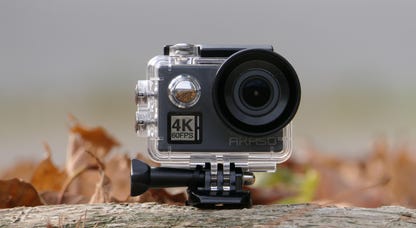
Ferguson: It did actually, to a surprising extent, in two ways. One is that filmmaking is increasingly digital. The entire film was made digitally, filmed with several different high-definition cameras. We used fairly fancy, extensive, high-definition cameras for the United States interviews. We used newly available, much smaller high-definition camcorders for our Iraq footage, which turned out to be a very good choice, although it was difficult, because we got two of the first 40 of these systems that were available in the United States and they were new and they had a somewhat complicated work flow.

Click here to Play

Video: Trailer for 'No End In Sight'
Watch a trailer for Charles Ferguson's new documentary on the war in Iraq. The film hits theaters in major U.S. cities Friday.

And things in Iraq are such that if something goes wrong, you don't just call up customer service. Sometimes it was a bit complicated, but it turned out that it was quite helpful that I had a fairly reasonable understanding of how digital systems worked. And of course, all the editing was digital.

And then the other thing that turned out to be very helpful, was that, while the two activities are by no means identical, there are striking similarities between starting a software company and making a film. In both cases you are, in effect, starting a new company. You have to build a team from scratch. You have to acquire talent (and) financing and you have to design your product, think about it, then you have to actually create it. And in both cases there's time pressure and financial pressure. So the experience of having started a company and having an idea and taking it from conception into fruition turned out to be a very relevant and helpful experience.

There was also another very important thing. I found it helpful in both cases to have this somewhat peculiar combination of paranoia and fear on the one hand, self-confidence on the other. The usefulness of the paranoia and fear was that in both cases I was doing something that was new to me and it was very important and very valuable to listen to the people around me, including my employees, who to a very large extent taught me my job.

I tried to have a sense of humility about what I knew relative to what they knew. That turned out to be very helpful. I learned a lot from the people I was working with, who were incredibly generous and great and helpful, in both cases, both with the company and the film. But at the same time, at a certain point, after you've listened to everybody, you have to make decision and sometimes it's a decision that goes against the recommendations of most people.

More Newsmakers

See more CNET content tagged:
Iraq, film, documentary, occupation, filmmaking

Add a Comment (Log in or register) 2 comments
Charles Ferguson and filmmaking
by billthurman August 10, 2007 5:40 AM PDT
congratulations Charles Ferguson for making a film on the whole sorry occupation of Iraq. your
comment that most Americans don't or won't read was particularly true. it's a really sad commentary on the so called "biggest, freedom-lovingest democracy' on the planet. the remark about the shocked senators shows that they didn't know what was going on in the first place (since they were totally lied to) and still don't. your comment about putting together teams was good. without a team you'll never leave the ground.
Reply to this comment
Charles Ferguson and filmmaking
by billthurman August 10, 2007 5:40 AM PDT
congratulations Charles Ferguson for making a film on the whole sorry occupation of Iraq. your
comment that most Americans don't or won't read was particularly true. it's a really sad commentary on the so called "biggest, freedom-lovingest democracy' on the planet. the remark about the shocked senators shows that they didn't know what was going on in the first place (since they were totally lied to) and still don't. your comment about putting together teams was good. without a team you'll never leave the ground.
Reply to this comment
Powered by Jive Software
advertisement

Latest tech news headlines

RSS Feeds

Add headlines from CNET News to your homepage or feedreader.

More feeds available in our RSS feed index.

advertisement

Inside CNET News

Scroll Left Scroll Right
  • Nanotech: The Circuits Blog

    Timing rumors surface for AMD plant spin-off

    Rumors persist that Advanced Micro Devices is planning to spin off all or part of its manufacturing operations.

  • Gallery

    Photos: Ron Paul's RNC alternative

    As the Republican convention took place just miles away, a crowd rallied for the former presidential candidate and his message of limited government, ensured civil liberties, lower taxes, and peace.

  • Digital Noise: Music and Tech

    Was 1980s music that bad?

    NPR asks listeners which year featured the best music, and the 1980s emerge as a bleak era. Personally, the '80s figure prominently in my collection, but well behind the 1970s.

  • Beyond Binary

    Microsoft begins big ad push

    Microsoft's multi-year push, estimated at $300 million, begins with a spot featuring Bill Gates and Jerry Seinfeld aired during Thursday's NFL game.

  • Video

    YouTube plays party politics

    During the presidential campaigning four years ago, YouTube didn't even exist. Now it's a tool candidates must master to get their message across. CNET's Kara Tsuboi stops by the YouTube upload booths at the Democratic and Republican conventions to find out why Google's video site has such a big presence in Denver and St. Paul, Minn.

  • News - Digital Media

    Michael Moore plans Net-only film premiere

    Filmmaker plans to premiere his latest documentary exclusively on the Internet for free, forgoing the traditional theatrical release.

  • Video

    Political party playlists

    We know the Democrats and Republicans are split over policy issues, but does their musical taste fall down party lines too? And what kind of gadgets did they bring to the conventions to listen to their music? CNET reporter Kara Tsuboi finds out.

  • News - Politics and Law

    McCain talks up oil drilling, green energy

    Republican presidential candidate says we need to drill new wells now, while supporting innovative transportation technologies and "the use of wind, tide, solar and natural gas."

  • News - Cutting Edge

    Execs predict next Google-like tech

    On eve of company's 10-year anniversary, researchers and business pundits speculate about what technologies might someday have as much impact as Google.

  • Gallery

    Photos: The brains behind Google Chrome

    Here's a look at some of the engineers and executives who took the stage at the company's headquarters as they unveiled the new browser.

  • Webware

    10 things we'd like to see in Chrome

    Google's Chrome is pretty good, but it could be a whole lot better. We've rounded up 10 fairly extensive ways to tweak it to make it an all-around better browser.

  • Green Tech

    Clean-tech group forms to support Obama

    "Clean Tech and Green Business for Obama" aims to raise $1 million for the Democratic presidential nominee while elevating issues of climate change and alternative energy.