September 19, 2007 7:28 AM PDT

Cisco outlines next Web revolution

A Cisco Systems senior executive this week said he believes that a major wave of innovation is due, thanks to the Web, growing urban populations and low hardware costs.

"No army can withstand the strength of an idea whose time has come," Senior Vice President Howard Charney said, borrowing from Victor Hugo to summarize the power of the Internet.

Speaking in Brisbane, Australia, this week, Charney said the world--now split into "information-rich" developed countries and "information-poor" developing countries--is on the precipice of a major wave of innovation.

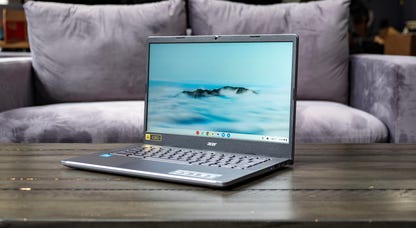
If the so-called $100 laptop developed by Nicholas Negroponte's One Laptop per Child nonprofit becomes available, as planned, to 2 billion people in China and India, and with more than half the world's population living in cities by 2008, the effect on information-rich and information-poor worlds will be profound, Charney said.

Greater access to information will improve living standards by removing isolation, which will, in turn, stem the growing disparity between productivity growth rates of information-poor and -rich nations--a gap that, according to an Organisation for Economic Cooperation and Development report, has doubled in the last decade, Charney noted.

However, he said his vision is not entirely philanthropic. For developing nations to improve life, they will need networks--Cisco's networks, he hopes--regardless of whether the networks are based on fiber-optic lines or wireless technology.

"You know, we're very big," Charney said. "When you're big, you have societal obligations...But are we going to be making profits off (building networks in developing countries)? Yes, there is a business proposition."

Intelligent Business Research Services analyst Kevin McIsaac agreed that "enabling technology" like a laptop will help, but he posed the question, "What else will they need?"

In Bangladesh, microfinance specialist Grameen Bank lent as little as $5 to women to buy a mobile phone, McIsaac noted. "This was incredibly important to enable the technology for these women to get started. They would rent out the time on the phone, which was enough to live, pay the mortgage and was a vital piece of technology in the village."

Instead of walking two days into the village to sell their produce, the women were able to call local buyers and negotiate better prices, which offered a better outcome than would have been possible under stressed conditions, McIsaac added.

Across the information-rich divide
However, innovation won't simply happen for information-rich countries, Cisco's Charney said.

"Our challenge today is in recognizing the potential of new technology and putting it to use faster than before," he said.

"To sustain innovation, we need investment, and sometimes that seems like crazed speculation," he said. "This does not mean people should take greater risks. Investment occurs in different ways, and sometimes, people get caught up in making money, and (they) build out business models that don't turn out to work."

Charney cited as an example past investments in dark fiber, or fiber-optic cable that had been laid but was not put to use, that eventually was used to help launch a viable business model: the Indian outsourcing industry, which now is worth hundreds of billions of dollars, he said.

However McIsaac warned not to interpret retrospectively good investments for efficient outcomes. "Value has come out of the (dot-com boom), but there was an enormous waste of investment," he said.

"Business needs to take a portfolio view of investments in technology. Five percent should go into blue-sky investments, like wikis and Web 2.0 for knowledge management projects, but 30 percent should go into keeping IT running and improvements on existing technology."

Liam Tung of ZDNet Australia reported from Sydney.

See more CNET content tagged:
Cisco Systems Inc., innovation, investment, developing country, fiber-optics

Add a Comment (Log in or register) 1 comment
Then it's Cisco's duty to ensure content is available
by fred dunn September 20, 2007 4:16 PM PDT
And not blocked in these developing countries. Bravo to the OLPC program if they can get content beyond what their goverments allow. Otherwise it is nothing more than a hand-out.
Reply to this comment
Powered by Jive Software
advertisement

Latest tech news headlines

Resource center from News.com sponsors
Aligning CIO & CEO visions
What CIOs need to know

It's a simple truth. The closer you and your CEO see things, the greater your chance for success. Our exclusive report can help you get there—and help your business grow. To get the report, featuring the views of 765 CEOs on innovation. click here

Click Here!
What CEOs think: Innovation Insights for CIOs

Learn How CIOs can deliver strategic success for their enterprises

The New CIO: Beyond Technology

Learn how CIOs become heroes

Podcast: Chris Gorog of Napster

Learn about the impact of technology in strategy execution

The future of the Enterprise

Read more about tomorrow's organization

RSS Feeds

Add headlines from CNET News to your homepage or feedreader.

More feeds available in our RSS feed index.

advertisement

Inside CNET News

Scroll Left Scroll Right
  • News - Business Tech

    Chrome's JavaScript challenge to Silverlight

    The advent of Google's Chrome browser, software pros say, should spur a big speedup for JavaScript, which would raise its standing against Microsoft's Silverlight technology.

  • Gallery

    Photos: Top 10 reviews of the week

    Here are CNET Reviews' 10 favorite items from the past week, including the TiVo HD XL, Sony Cyber-shot DSC-H50, and the Dish Network's newest digital TV converter box.

  • News - Apple

    Apple watchers spot 'iPod Nano' pix, iTunes hints

    The rumor mill has long been predicting a longer, leaner new version of the iPod Nano, and now it's conjuring up some pictures.

  • Outside the Lines

    EIC Squared: Chrome, iPods, and a Dell-Salesforce union

    On this week's EIC Squared podcast CNET's Dan Farber and ZDNet's Larry Dignan discuss Google's latest rocket launch--the Chrome browser--as well as Apple's iPod event next week and a Dell-Salesforce.com union.

  • Video

    Katie Couric reflects on first Webcast

    The political conventions are over and so are CBS Evening News anchor Katie Couric's first series of Webcasts. CNET's Kara Tsuboi sat down with Couric on the final night of the Republican National Convention to discuss what she liked about Webcasting, some of her most memorable guests, and whether TV news will still be around by the next round of conventions.

  • News - Digital Media

    At 10 years old, whither Google?

    Daniel Sieberg of CBS News looks at how the company grew exponentially from start-up to superstar and part of our culture, but what's ahead?

  • Video

    YouTube plays party politics

    During the presidential campaigning four years ago, YouTube didn't even exist. Now it's a tool candidates must master to get their message across. CNET's Kara Tsuboi stops by the YouTube upload booths at the Democratic and Republican conventions to find out why Google's video site has such a big presence in Denver and St. Paul, Minn.

  • News - Gaming and Culture

    Are Demo and TechCrunch50 fragmenting their audiences?

    With both events scheduled to start Monday, many press, as well as venture capitalists and others are having to choose which one to attend.

  • News - Cutting Edge

    Execs predict next Google-like tech

    On eve of company's 10-year anniversary, researchers and business pundits speculate about what technologies might someday have as much impact as Google.

  • Gallery

    Images: The art of 'Spore' prototypes

    Will Wright and his Maxis team worked on dozens of prototypes to test the elements of their soon-to-be-released evolution game. Here's a sampling.

  • Webware

    Mozilla releases second Firefox 3.1 alpha

    Added features include support for a new video tag element introduced with the HTML 5 standard, along with some speed enhancements.

  • Green Tech

    Duke Energy to invest in mini solar power plants

    Can hundreds of rooftop solar panels collectively operate like a central power plant? Duke Energy launches $100 million distributed solar program to find out.