Version: 2008
  • On CHOW: Sexy vampire party

July 8, 2004 4:00 AM PDT

Perspective: Bad tech advice for the president

See all Perspectives
Bad tech advice for the president
Somebody within the Bush administration is giving the president some very bad advice on broadband policy.

Despite its flaws, the Telecommunications Act of 1996--whereby the regional Bell telephone companies must sell unbundled elements of their networks to rivals at just and reasonable rates--is a success: Consumers are saving more than $10 billion annually, current employment levels in the wireline telecommunications sector remain 17 percent above historical trends and, in response to competitive forces, incumbent average net investment has increased by $759 per year for each unbundled line they provided, or about 6.4 percent per year in the aggregate.

Still, under lobbying pressure from the Bells, the Bush administration recently turned its back on this successful policy by declining to seek Supreme Court review of an appeals court case striking down the Federal Communications Commission's unbundling rules.

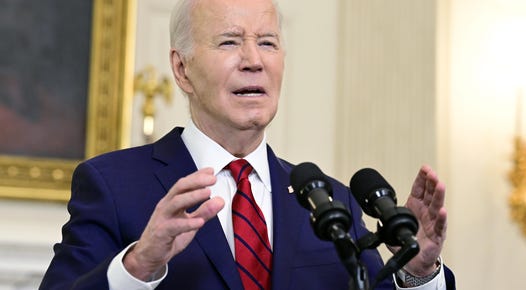
In a recent speech, President Bush said this decision was a "smart thing" because the FCC's rules did not require the incumbents to unbundle new fiber to the home, and having an appeals court reach a contrary conclusion would destroy the Bells' investment incentives.

However, somebody apparently forgot to tell the president that this court case was not about the Bells' efforts to implement fiber to the home: The issue at bar is the Bells' obligation to unbundle the existing copper infrastructure (plus other essential elements).

With all due respect to Chairman Powell, this statement is mere "techno babble" and bears no nexus to the true economic structure of the market.
FCC Chairman Michael Powell says we need not be concerned about this lack of unbundled access to the existing network, because "competition from wired, wireless and voice over the Internet is accelerating and it is going to be even better." With all due respect to Chairman Powell, this statement is mere "techno babble" and bears no nexus to the true economic structure of the market.

Like it or not, so-called fixed-mobile competition simply doesn't exist. While Americans love their mobile phones, there is no empirical evidence that the majority of consumers view their mobile phones as a substitute for fixed line service. Not only has this point been proven empirically, but Cingular's economic expert for its proposed takeover of AT&T Wireless conceded this very fact under oath at the FCC. As SBC President Ed Whitacre once admitted: Wireless is "not going to displace the wireline network. It's certainly going to be a big product, but it's never going to be the substitute. Reliability is one reason."

Equally as important, you can't have meaningful "intermodal" fixed/mobile competition when, in the glib words of BellSouth President Duane Ackerman: "That's OK. We tend to own both." Indeed, should the FCC approve Cingular's proposed acquisition of AT&T Wireless, about 70 percent of wireless subscribers served by national wireless carriers will be in the hands of the Bells. Intermodal competition? How about intermodal collusion.

Similarly, claims that voice over Internet Protocol (VoIP) is going to mitigate the incumbents' market power are premature, at best, and may also be overstated. VoIP over the public Internet is an incredibly inefficient use of bandwidth, and therefore relatively poor quality of service is inherent to the product. Yet for those companies willing to invest in "managed" VoIP services--for example, developing sophisticated backbone VoIP platforms that address the quality issues--the Bells have convinced the FCC that this is still a "telecommunications service" and therefore is subject to billions of dollars a year in access charges.

We also need to remember that VoIP is not a facility but only a service provided over a broadband facility. Thus, even if VoIP takes off, consumers still have a choice of only two facilities-based broadband providers--the incumbent Bell monopolist or the incumbent cable operator.

Even if VoIP takes off, consumers still have a choice of only two facilities-based broadband providers--the incumbent Bell monopolist or the incumbent cable operator.
Finally, even if the issue was about promoting Bell fiber to the home, both the press and Wall Street analysts report that Bell efforts are more rhetoric than economic reality. Look at SBC's track record, for example.

Several years back, SBC announced its "Project Pronto" to implement fiber to the home efforts in their service territory. Then, less than a year ago, Whitacre stated that he just did not "see the incentive for FTTP," particularly as costs will exceed $2,000 per customer. Instead, SBC acquired $500 million in EchoStar convertible debt to facilitate joint marketing for phone and video service. Yet, as part of its political deal with the Bush administration, SBC just announced that it changed its mind and is going to implement fiber to the home to deliver "integrated video, data and voice services," which means, by definition, that SBC now plans to strand its $500 million-plus Echostar investment. It doesn't take a Harvard MBA to realize that there's something rotten in Houston.

In sum, President Bush has consistently argued that we should have a choice in broadband providers. It is unclear how policies that rip the rug out of the competitive telephone industry in favor of incumbent monopolists achieve this laudable policy goal, however.

Indeed, if this anticompetitive policy is really supposed to create "regulatory certainty," then the only thing that is certain is that we are traveling fast back to a world of vertically integrated (albeit regional not national) monopolies for all of U.S. consumers' "one stop shopping needs." Responsible public policy requires more, and therefore when Powell and his colleagues at the FCC sit down to write the next go-round of rules, the least they should do is to develop a cohesive set of transition rules based upon economic facts rather than technological rhetoric.

Biography
Lawrence Spiwak is president of the Phoenix Center for Advanced Legal and Economic Public Policy Studies, an international nonprofit think tank based in Washington, D.C.

More Perspectives

Add a Comment (Log in or register) (8 Comments)
  • prev
  • 1
  • next
Build the infrastructure...
by bobtheman22 July 9, 2004 5:28 AM PDT
There is nothing stopping a company from building their own infrastructure. Qwest was able to do it in less then 10 years, Covad even less. UNE-L is still mandated under the Telecom Act of 96. Report the facts or don't report at all. I owned a CLEC we built our own infrastructure because what many, including reporters, don't realize is how poorly built the ILEC infrastructures is for broadband. Sorry, but there isn't some magic switch that can be flipped in the ILEC's infrastructure suddenly providing Gbps of bandwidth to everyone.
Reply to this comment
Bad political advice for Kerry
by July 9, 2004 7:39 AM PDT
Someone in the Kerry camp is giving him VERY VERY bad advice. The part where they told him to be a socialist.
Reply to this comment
Kerry camp
by John Kuzak June 4, 2007 1:39 PM PDT
http://www.analogstereo.com/acura_cl_owners_manual.htm
Bad Advice For The President
by bobanavrin July 9, 2004 6:09 PM PDT
Look's like you need a new telecom expert.
Pronto was never about getting fiber to the premise. It was about getting fiber closer to the premise.
Reply to this comment
Bad advice on everything
by July 9, 2004 6:25 PM PDT
I agree that Bush has gotten bad advice on technology--and so much else. The wireline telcos have successfully fought competition for well over a hundred years--despite the huge success of the AT&T divestiture (which resulted from an anti-trust case). But Bush seems to listen to incumbent business interests rather than to anyone who is seeking to promote a more competitive environment--or even seeking to increase economic efficiency.

In these days of remembering former president Reagan, it's worth remembering that Reagon was the president who oversaw the AT&T breakup and under whose FCC, real competition in the long distance market took off. Mr. Bush, I was at the FCC during the Reagan years and, well, you're no Ronald Reagan.
Reply to this comment
Bad advice on everything
by bobanavrin July 9, 2004 6:55 PM PDT
Isn't now the time there is real competition in the long distance arena, now that the ILEC's are able to offer long distance. Unless you consider MCI/Worldcom a success.
Economists shouldn't talk Tech.
by David Arbogast July 12, 2004 1:45 PM PDT
Lawrence is part of a legal and economic think tank. He is NOT a technology guru. Suggesting that Bush has bad information while denouncing new technologies without any substantial evidence is lazy, at best. I know at least a dozen people that have only cell-phone service, and they couldn't be happier. I have two DSL lines from Covad, and a VOIP service that has excellent quality. I no longer receive any bills from SBC and my service has never been better. Given that none of my existing service is tied to any unbundling laws regulating SBC, I fail to recognize legitimate concern. As long as competitive alternatives exist, there is no need to place further restrictive legislation on SBC.

So, what we have is an economist who thinks he knows more about communication technology than the chairman of the FCC and writes articles that are politically biased against the Bush administration. Fantastic news, this is.
Reply to this comment
Response...
by July 27, 2004 3:43 PM PDT
Thank you for your passionate response to my op-ed.

However, I take issue with several of your comments.

As a general proposition, I am not denouncing new technologies; to the contrary, I am a big proponent of them. However, the correct policy question is not whether a bunch of technologies do the same thing, but whether consumers view them as close substitutes to affect Bell strategic behavior (something with which you are clearly dissatisfied).

For example, if you look on our web page (www.phoenix-center.org), you will see a tremendous amount of empirical data showing that while, yes, some people have "cut the cord" for mobile, most consumers still don't view mobile as a close substitute and, therefore, mobile telephony has no pricing constraint on Bell wireline pricing. (Plus, considering that after the AT&T Wireless/Cingular merger goes through, 70% of all US consumers served by a national wireless carrier will be served by a Bell owned carrier, it strains common sense to think the Bells want to have their wireless operation canibalize their fixed line operations.) If after review of this sophisticated analysis you still consider my views "lazy" for some "lack of substantial evidence", then I will buy you dinner.

Similarly, you state that you have two DSL lines from Covad -- good for you. However, where do you think Covad gets its lines from? That's right, it uses unbundled network elements from the Bell companies. Thus,I can assure you that Covad is greatly concerned about the current situation as its entire business model is "tied to ... unbundling laws regulating SBC."
(8 Comments)
  • prev
  • 1
  • next
advertisement

Latest tech news headlines

RSS Feeds

Add headlines from CNET News to your homepage or feedreader.

More feeds available in our RSS feed index.

Markets

Market news, charts, SEC filings, and more

Related quotes

Dow Jones Industrials (0.17%) 17.46 10,023.42
S&P 500 (0.25%) 2.67 1,069.30
NASDAQ (0.34%) 7.12 2,112.44
CNET TECH (0.20%) 3.03 1,538.38
  Symbol Lookup
advertisement

Inside CNET News

Scroll Left Scroll Right