Asci Red, a supercomputer created by Sandia National Laboratories and Intel, has retained its position at the top
of the list of the world's fastest
computers, although the overall leader in supercomputing still seems to be
Silicon Graphics.
Cray T3E
systems from SGI took second, third, and fourth place on the semiannual list.
Numbers two and three are at unspecified, classified U.S. government
facilities. IBM-powered machines also figure prominently on the list.
The top 500 list is written by Jack Dongarra, Hans-Werner Meuer,
and Erich Strohmaier, supercomputer experts who have updated it twice each
year since the list was founded in 1993.
The top 500 list is a rarefied place. Just to get on, you have to have a
machine that can perform 17 billion calculations per second. But if you want
that performance on your own desktop, it's just a matter of time: a top-of-the-line desktop computer today could have made it onto 1993's top 500 list.
Although experts debate the validity of the rankings, high placement on the
list typically comes with bragging rights for the companies and
institutions that designed the machine. These computing behemoths are
generally highly customized machines built through the efforts of both the
computer vendor and the institution that eventually uses it.
Among other statistics from the list:
SGI was a big winner in the top 500 list, with 183 of the systems. SGI
machines are responsible for half the total computing power on the list. Sun Microsystems has the second-highest
presence, with 126 systems, up from 111 in June.
IBM gained systems on the list, moving
from 75 systems in June to 105 now.
The first Japanese computer is a Hitachi/Tsukuba at 14th place.
Industry has more supercomputers than academia. While research
computers on the list dropped from 94 to 90 machines since June, industry computers
increased from 178 to 206.
Supercomputing's Top 10
Rank
Location
Manufacturer
1.
Sandia lab
Intel
2.
Classified
SGI
3.
Classified
SGI
4.
Los Alamos lab
SGI
5.
U.K. Meteorological Office
SGI
6.
Lawrence Livermore lab
IBM
7.
Lawrence Livermore lab
IBM
8.
U.K. Centre for Science
SGI
9.
Naval Oceanographic Office
SGI
10.
Silicon Graphics Technical Computing Group
SGI
Source: Top 500 list
While the Pentium Pro-based Asci Red retained its No. 1 ranking among
supercomputers, its spot at top of the heap won't last for long.
Two contenders--Blue Mountain, Los Alamos
National Laboratory's main supercomputer, and Blue Pacific, a machine
from IBM and Lawrence Livermore National Laboratory--are
designed to be about four times faster than Sandia's machine. Unfortunately
for both, the performance data isn't in yet.
Lawrence Livermore spokesman David Schwoegler said his lab was unable to
provide a performance measurement because its computer didn't run the measurement program while it was assembled at an IBM facility in Poughkeepsie, New York. The machine, based around IBM's Power3 processors, has been shipped to Livermore, but now is only two-thirds reassembled.
The Los Alamos Silicon Graphics machine
is fully built, but LANL spokesman Jim Danneskiold refused to disclose any
performance numbers until the SC98 supercomputing conference,
which begins Saturday in Orlando, Florida.
Erich Strohmaier, who helps maintain the top 500 list, said he didn't know
where the computers were, but added, "The National Security Agency is certainly one large consumer of computing power for the government, but
most likely not the only one."
All three of the top machines are the result of an Energy Department project to develop computers that can simulate the effects of massive nuclear explosions. The computers have come to replace underground nuclear testing. Asci Red, meanwhile, is likely the last of its line. Intel dropped
out of supercomputing development after the machine was completed.
The Avalon computer, now running 140 Alpha chips and the Linux operating system, moved up from 315th place
to 114th, courtesy of a memory upgrade and additional processors. However,
a machine at Sandia National Laboratories that is also made of a cluster of
Alpha processors beat out Avalon by taking 98th place.
The list ranks computers according to how fast they perform on "benchmark"
tests, a standard yardstick that allows different computers to be measured
solving the same computing problem. The top 500 list uses the Linpack
benchmark, originally developed in the 1970s, in which the computer has to
solve a standard mathematical problem.
Some observers, including Dick Russell at Tera
Computer, have questioned the validity of using Linpack to rank the
systems. Russell said the benchmark doesn't actually reflect computer
performance in real-world applications.
But Chris Willard of International Data
Corporation said Linpack is "as good a definition as any" for comparing
computers' relative performance. He did caution, however, "It's not a good measure
to determine how fast your computer will run on a given application, but
that's almost always true with benchmarks."
Strohmeier said one major reason the top 500 list uses Linpack is simply
that it's the benchmark that has by far the most results available.
Intel is an investor in CNET: The Computer Network, publisher of News.com.
Join the conversation
Comment replyThe posting of advertisements, profanity, or personal attacks is prohibited. Click here to review our Terms of Use.
Web giant is spending $120 million to beef up its Mountain View, Calif., headquarters, according to filings with the city reviewed by the San Jose Mercury News.
Tor's "obfsproxy" technology would make encrypted data look innocuous and let it dodge government censors. That could help citizens in Iran reach blocked sites as antigovernment protests reportedly loom.
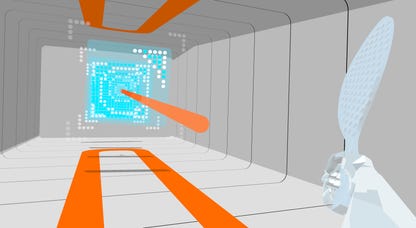
MIT creates a simulation to celebrate the 50th anniversary of Spacewar. A relic of the early days of minicomputers, it was one of the first computer video games and set the stage for many others, including Asteroids.
Join the conversation